
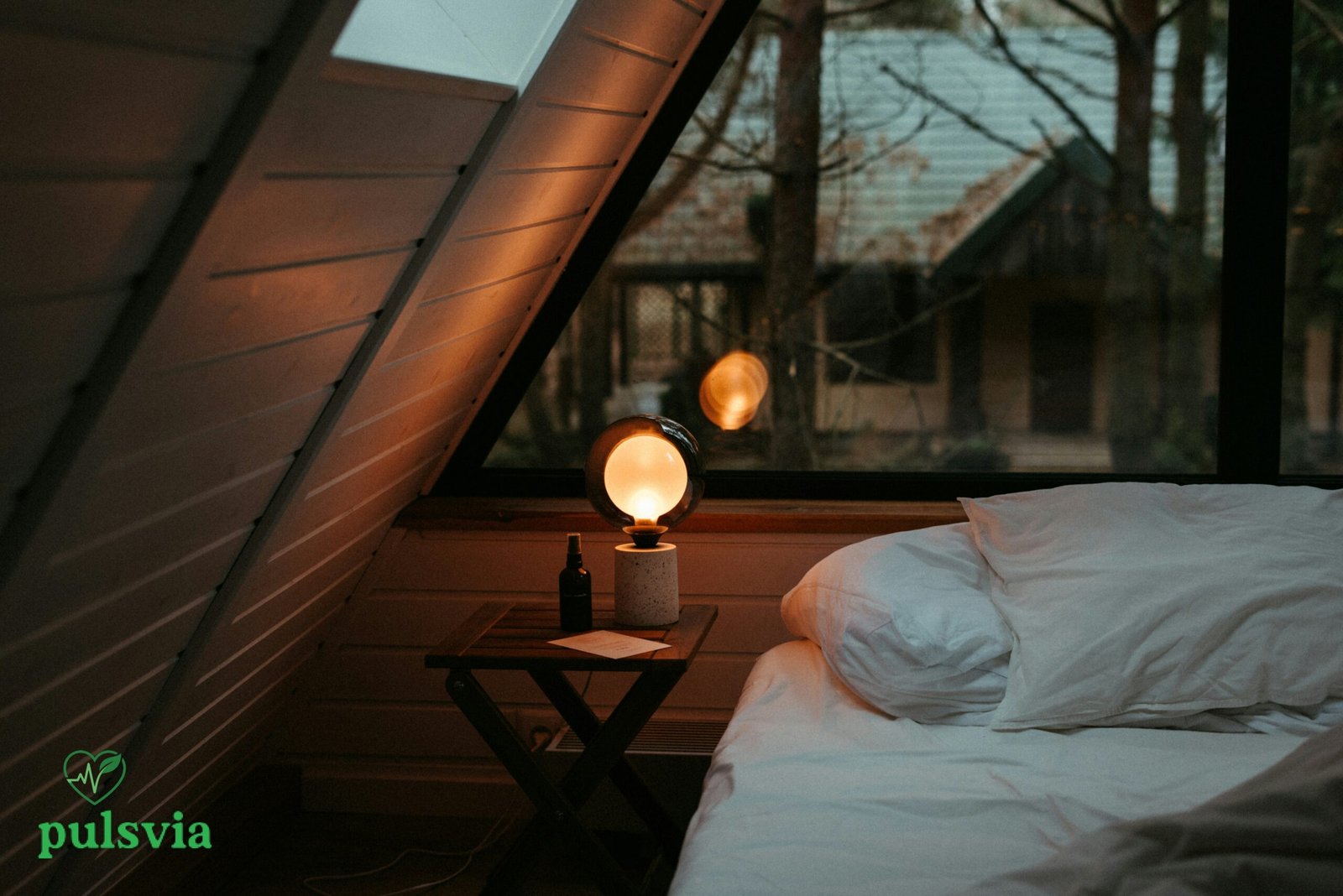
Ever wonder why you sleep better in a hotel room with blackout curtains than at home with streetlights peeking through your blinds? The answer often comes down to your sleep environment—specifically temperature, light, and noise. Getting these three factors right can make falling asleep easier and help you stay asleep longer. Let’s walk through what actually works, based on what sleep experts recommend.
Key Takeaways
- Cool rooms help sleep — most experts suggest keeping your bedroom between 60-67°F for better rest [1].
- Darkness matters — even small amounts of light can interfere with your body’s natural sleep signals [2].
- Consistent, low background noise may help mask disruptive sounds for some people.
- Small changes add up — you don’t need an expensive bedroom makeover to see results.
- Everyone’s needs differ slightly — use these guidelines as a starting point, then adjust to what feels right for you.
What It Is
The best sleep environment is a bedroom setup—covering temperature, light, and noise—that supports your body’s natural ability to fall asleep and stay asleep. Small adjustments to these three factors can meaningfully improve sleep quality for many people [1].
Here’s why this matters day-to-day: your body relies on environmental cues to know when it’s time to rest. A room that’s too bright, too warm, or too noisy can send the wrong signals, keeping your brain more alert than it should be at bedtime [2].
Think of it like trying to relax at a party with the lights on and music blasting—technically possible, but a lot harder than it needs to be.
How Poor Sleep Environment Shows Up
You might have a sleep environment problem if you notice:
- Waking up multiple times during the night for no clear reason
- Feeling too hot or too warm and kicking off blankets repeatedly
- Being easily startled awake by street noise, a partner’s movements, or a pet
- Struggling to fall asleep even when you feel tired
- Needing blackout curtains or an eye mask to feel comfortable
- Waking up earlier than planned because of early morning light
If several of these sound familiar, your bedroom setup might be working against you.
Causes & Risk Factors
A few common environmental issues tend to disrupt sleep the most:
- Bedroom too warm — body temperature naturally drops as part of falling asleep; a hot room can interfere with this process [1]
- Light exposure at night — light, especially blue light from screens or bright overhead lights, can delay the release of melatonin, the hormone that helps you feel sleepy [2]
- Streetlights or early morning sun — even small amounts of light through windows can lighten sleep or cause early waking
- Traffic, neighbors, or household noise — sudden or inconsistent sounds are more disruptive than steady background noise
- Uncomfortable mattress or pillows — physical discomfort can cause frequent waking, even if the room temperature and light are fine
- Shared sleep spaces — partners, kids, or pets moving around can interrupt sleep cycles
Did You Know?: Body temperature naturally drops by 1-2 degrees as part of the process of falling asleep, which is part of why a cooler room tends to support better rest [1].
How Experts Assess This
Most people don’t need a formal evaluation for a sleep environment issue. Simple trial and error at home often works.
That said, if sleep struggles continue despite a good setup, here’s what a visit with your primary care physician might involve:
- Sleep history conversation — questions about your bedroom setup, temperature preferences, and noise sensitivity
- Sleep diary — tracking your environment and sleep quality for one to two weeks
- Screening for other causes — ruling out conditions like sleep apnea or anxiety that can mimic environmental sleep problems
- Referral to a sleep specialist, if needed, for further evaluation
Tip: Before your appointment, jot down your typical bedroom temperature, whether you use blackout curtains, and any recurring noises that wake you up. This makes the conversation faster and more useful.
Treatment & Management
Let’s break this down by each of the three main factors: temperature, light, and noise.
Temperature: Finding Your Cool Zone
Quick Wins:
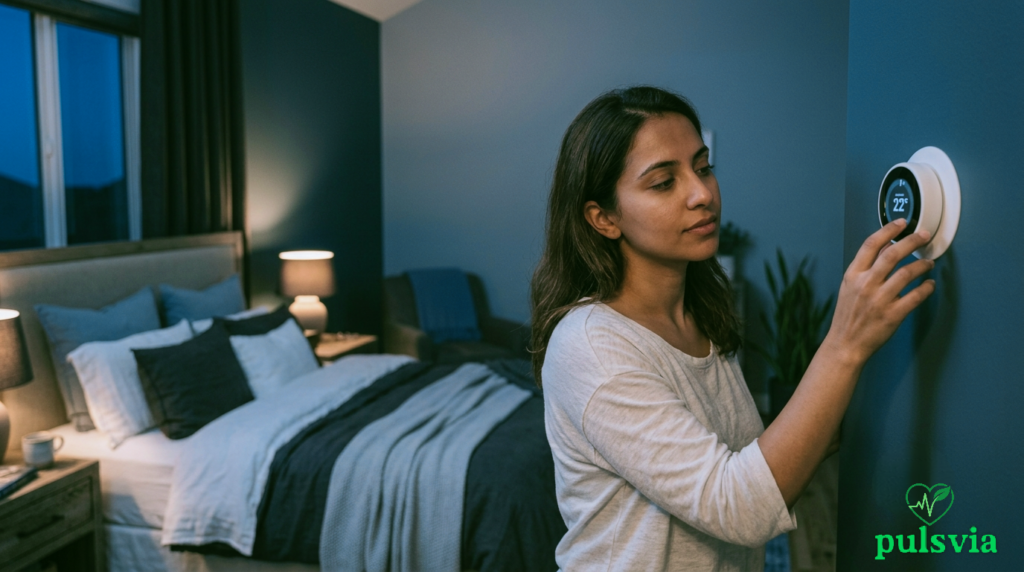
- Set your thermostat between 60-67°F before bed [1]
- Use breathable cotton or moisture-wicking sheets
- Crack a window slightly for airflow, weather permitting
- Try a fan for both cooling and gentle background noise
- Avoid heavy blankets in warmer months
Important: If you share a bed with a partner who prefers a different temperature, consider separate blankets or a mattress cooling pad rather than compromising on a room temperature that’s uncomfortable for either of you.
Light: Creating True Darkness
Steps to reduce nighttime light exposure:
- Use blackout curtains or a sleep mask
- Cover or dim any electronics with LED lights (chargers, clocks, routers)
- Avoid screens 30-60 minutes before bed, since blue light can delay melatonin release [2]
- Use a dim, warm-toned nightlight if you need to get up during the night
- Get bright natural light exposure in the morning to help reinforce your circadian rhythm, your body’s internal clock [3]
Warning: If you work night shifts, exposure to bright light at the wrong times can confuse your body clock further. Talk to your primary care physician about strategies specific to shift work if this affects you.
Noise: Managing Sound Disruptions
| Option | How It Works | Best For |
|---|---|---|
| White noise machine | Produces steady, consistent sound | Masking traffic or household noise |
| Earplugs | Physically blocks sound | Light sleepers, shared bedrooms |
| Fan | Provides airflow + background hum | Combining cooling and noise masking |
| Soundproof curtains | Reduces outside noise through windows | Apartments near busy streets |
Evidence on white noise machines is mixed—some people find them helpful for masking disruptive sounds, while research on how much they improve overall sleep quality is still limited [4]. If you try one, a consistent, low volume tends to work better than loud or variable sounds.
Tip: If earplugs feel uncomfortable, foam options designed for sleep (not swimming) tend to fit better and reduce pressure on your ears.
Prevention & Self-Care
Building better sleep environment habits works best as a step-by-step process:
- Set your thermostat to the 60-67°F range starting tonight
- Add blackout curtains or a sleep mask if light is an issue
- Identify your biggest noise disruptor and test one solution (earplugs, white noise, or soundproofing)
- Remove electronics with bright lights from your nightstand
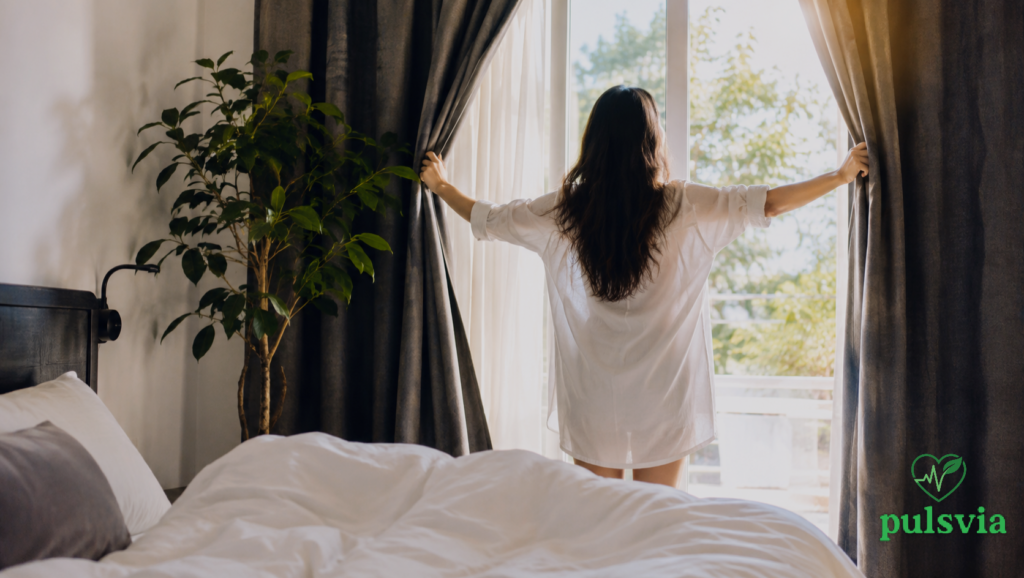
- Get morning sunlight within an hour of waking to support your body’s natural rhythm [3]
- Reassess after two weeks — small tweaks may be needed based on the season or your personal comfort
Free Resource Idea: Consider creating a simple bedroom checklist—temperature, light sources, and noise triggers—to review every few months as seasons change.
When to See a Doctor
Reach out to your primary care physician if:
- You’ve optimized your bedroom environment but still struggle to fall or stay asleep most nights
- Poor sleep is affecting your mood, focus, or daily functioning
- You suspect an underlying issue like sleep apnea (loud snoring, gasping, or choking sounds during sleep)
- Sleep problems have lasted longer than a month despite consistent effort
When to Seek Urgent Help
Sleep environment issues are rarely emergencies on their own. However, call 911 or go to the nearest emergency room if you experience:
- Chest pain, irregular heartbeat, or severe shortness of breath during sleep
- Sudden confusion or extreme difficulty waking someone up
- Thoughts of self-harm connected to exhaustion or ongoing sleep deprivation
If you or someone you know is having thoughts of suicide, call or text 988 (Suicide & Crisis Lifeline), available 24/7.
Summary
- Start with temperature — a cool room (60-67°F) is one of the simplest, most effective changes you can make [1]
- Darkness supports melatonin — blackout curtains and dimmed screens help your body’s natural sleep signals work properly
- Noise solutions are personal — what works for one person may not work for another, so experiment with white noise, earplugs, or soundproofing
- Give changes time — most people notice a difference within one to two weeks of consistent adjustments
- Talk to your doctor if sleep problems continue despite a well-optimized bedroom
What’s the ideal bedroom temperature for sleep?
Most sleep experts recommend somewhere between 60-67°F for optimal sleep [1]. Personal comfort varies, so feel free to adjust slightly within that range.
Does light really affect sleep quality that much?
Yes, light exposure—especially blue light from screens—can delay melatonin release and make it harder to fall asleep [2]. Even small amounts of light through windows can affect sleep for some people.
Are white noise machines actually effective?
Some people find them helpful for masking disruptive background sounds, though research on their overall effectiveness for improving sleep quality is still limited [4]. They’re generally considered safe to try for most adults.
Should couples with different temperature preferences use separate blankets?
This can be a practical solution when one partner runs warmer or cooler than the other. Separate blankets or a dual-zone mattress pad may help both people sleep more comfortably.
How long does it take to notice improvement after changing my sleep environment?
Many people notice some improvement within a few days to two weeks of consistent changes. Sleep quality tends to improve gradually rather than overnight.
References
- National Heart, Lung, and Blood Institute (NIH). “How Much Sleep Is Enough?” https://www.nhlbi.nih.gov/health/sleep/how-much-sleep
- National Institute of Neurological Disorders and Stroke (NIH). “Brain Basics: Understanding Sleep.” https://www.ninds.nih.gov/health-information/public-education/brain-basics/brain-basics-understanding-sleep
- National Institute on Aging (NIH). “A Good Night’s Sleep.” https://www.nia.nih.gov/health/good-nights-sleep
- Centers for Disease Control and Prevention. “Tips for Better Sleep.” https://www.cdc.gov/sleep/about_sleep/sleep_hygiene.html
This article is for educational purposes only and is not medical advice. For personal care, talk to your primary care physician. Call 911 for emergencies.