
Loud snoring, morning headaches, waking up exhausted after a full night in bed — these are the kinds of symptoms that send people searching for answers.
An at-home sleep apnea test has become an increasingly accessible first step for many adults. But before you assume it works like a direct-to-consumer DNA kit, it’s worth understanding exactly what this test does, who it’s designed for, and — just as importantly — what it can’t tell you.
This guide walks through the process from preparation to next steps, without overpromising on what a home test can deliver.
Key Takeaways
- Home tests are clinician-ordered — they’re not self-diagnosis tools you order independently online.
- They measure selected signals, not the full range of data collected in a sleep laboratory.
- A negative result doesn’t always close the case — persistent symptoms may still need further evaluation.
- Automated device summaries are not diagnoses — only a qualified clinician can interpret results meaningfully.
- Urgent symptoms like chest pain or severe breathing difficulty need 911, not a home test.
What is an at-home sleep apnea test?
An at-home sleep apnea test is a clinician-ordered overnight test that records selected breathing and body signals while you sleep at home. It may help evaluate suspected obstructive sleep apnea — the most common form of sleep-disordered breathing — in appropriate adults, but it does not measure every sleep signal and should not be used for self-diagnosis [2][6].
Home sleep testing has expanded considerably in recent years, with AASM reporting that home-based assessment and remote monitoring represent one of the most significant current directions in sleep medicine [1].
Is it the same as a sleep-lab test?
No. A home test typically collects fewer signals than a full in-laboratory polysomnogram — a comprehensive overnight study conducted at a supervised sleep center [2][8]. The right test for you depends on your symptoms, health history, and clinical picture.
Who May Be Considered for Home Testing?
Clinicians may consider a home test when an adult has symptoms suggesting uncomplicated obstructive sleep apnea (OSA) and does not have certain complicating conditions that would make laboratory testing more appropriate [2][6].
Important: A home test is not a complete substitute for every sleep-lab study. The decision should be made by a qualified clinician, not based on symptoms alone.
The U.S. Preventive Services Task Force notes that current evidence on screening for sleep apnea in adults without recognized symptoms remains an active area of clinical discussion [10].
Common Symptoms That Deserve Medical Attention
Several symptoms may be associated with sleep-disordered breathing and are worth raising with your primary care physician:
- Loud, habitual snoring.
- Witnessed breathing pauses during sleep.
- Gasping or choking sounds during the night.
- Waking with a morning headache.
- Excessive daytime sleepiness.
- Difficulty concentrating during the day.
- Resistant or poorly controlled blood pressure.
These symptoms may be associated with obstructive sleep apnea — but they do not confirm a diagnosis on their own [4][5].
What an At-Home Test May Measure
The exact signals collected depend on the specific device and service. Home tests commonly record some combination of:
Breathing changes
Reductions or pauses in airflow during sleep can indicate breathing events that a clinician will review [7].
Oxygen levels
Oxygen saturation — measured through a sensor usually placed on a finger — tracks how well the body maintains oxygen levels during the night [5][7].
Heart rate
Heart rate patterns throughout the night can provide supporting context for breathing data [7].
Breathing effort and airflow
Sensors may assess how hard the body is working to breathe, as well as whether air is actually moving through the airway [2][7].
Did You Know? Home sleep tests may collect fewer signals than in-lab polysomnography, which can record brain activity, muscle movement, eye movement, and more [8].
What a Home Test May Not Measure Well
Many home tests do not collect brain-wave data — a key component of a full sleep-lab study.
Without this information, it can be harder to determine exact sleep time, identify specific sleep stages, or fully evaluate sleep disorders that go beyond breathing-related events [2][8].
If your symptoms are complex, unclear, or don’t fit a straightforward pattern, a clinician may recommend in-lab testing regardless of home-test findings.
Home Sleep Test Versus Sleep-Lab Study
| Feature | At-Home Sleep Apnea Test | In-Lab Sleep Study |
|---|---|---|
| Setting | Patient’s home | Supervised sleep center |
| Convenience | Usually more convenient | More time-consuming |
| Sensors | Typically fewer sensors | More comprehensive monitoring |
| Sleep stages | Often not directly measured | Brain activity can be measured |
| Best use | Selected adults with suspected uncomplicated OSA | Complex cases or unclear symptoms |
| Result interpretation | Requires qualified review | Requires qualified review |
Neither test is universally better — the right choice depends on your individual clinical situation [2][6][8].
How to Prepare for a Home Test
Preparation is straightforward for most people. Here’s what generally applies:
Follow the clinician’s instructions
Every device and service may have slightly different setup steps. The instructions provided by your clinical team take priority over general advice.
Keep your usual routine unless instructed otherwise
Unless your clinician says otherwise, stick to your regular bedtime, meal timing, and activities.
Avoid changing medication without medical advice
Warning: Do not change, stop, or adjust any prescribed medication based on an upcoming home test without first speaking with your clinician.
Charge or prepare the device as directed
A device that runs out of battery or isn’t set up correctly may produce an incomplete recording.
Write down questions before the test
Having a prepared list makes your follow-up conversation more productive.
What the Night May Be Like
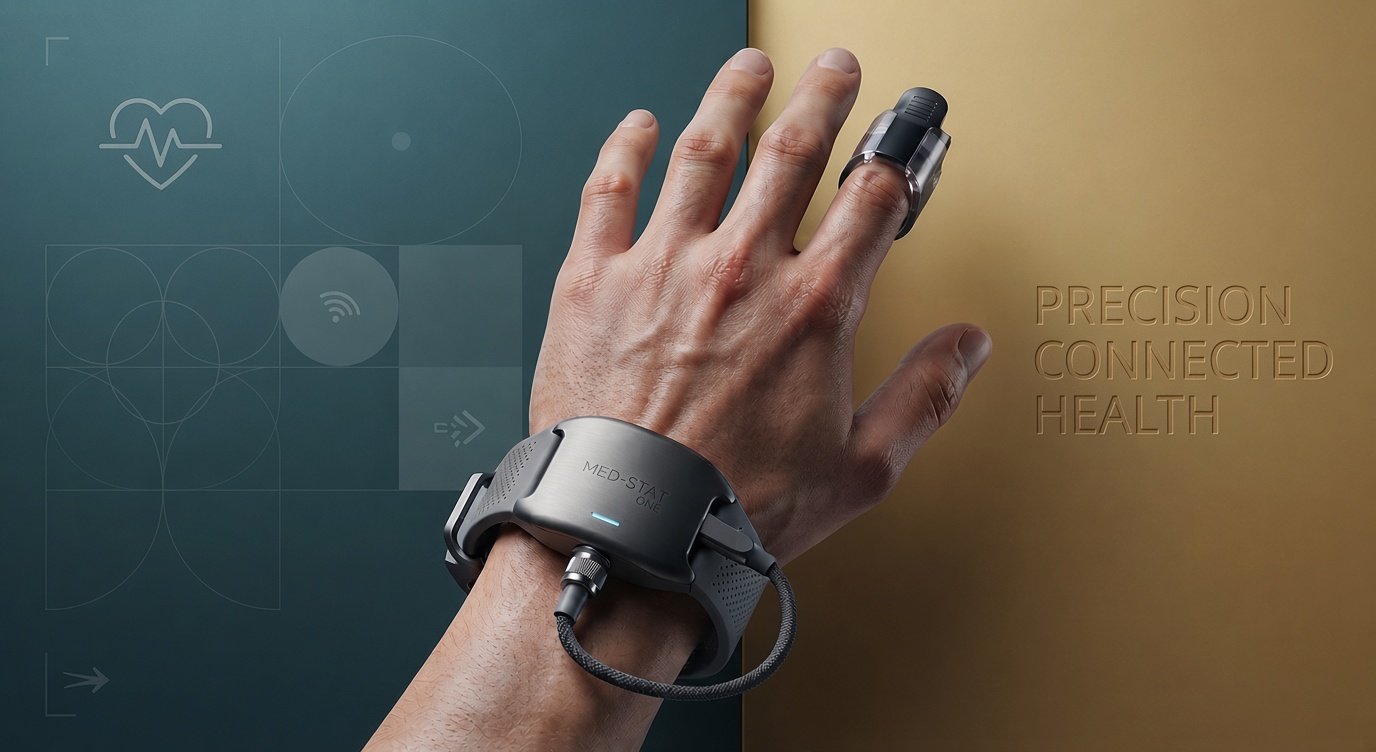
Depending on the device, you may be asked to wear sensors placed around the finger, chest, nose, or wrist — sometimes a combination of these.
Expect a few realities:
- Some equipment may feel unfamiliar or mildly uncomfortable.
- Sensors may shift during the night.
- A completely normal night of sleep may not happen because of the equipment.
- A technically inadequate recording is possible — and if that happens, a repeat test or alternative study may be needed [6][7].
Tip: Follow your usual routine as much as possible. Staying up later than normal or changing your sleeping position specifically for the test may affect the recording.
What Happens After the Test?
A clinician reviews the data
Most home test devices produce automated summaries, but these are not the same as a medical diagnosis. A qualified clinician must review the data in the context of your full clinical picture [2][6].
Possible outcomes
After review, several scenarios are possible:
- Findings support obstructive sleep apnea.
- Findings do not support a diagnosis of sleep apnea.
- The recording is incomplete or inconclusive.
- More testing — potentially including an in-lab study — is needed.
Quick Win: Ask who will interpret your result before using the device. Knowing the process in advance reduces uncertainty afterward.
What if the Result Is Negative?
A negative or inconclusive home test does not always explain persistent symptoms.
If clinical suspicion remains — meaning your symptoms continue or your clinician still has concerns — further assessment may be recommended. This might include an in-lab polysomnogram, which can capture data a home device cannot [6][8].
Do not assume a negative result rules out every possible sleep disorder.
Treatment and Next Steps
If results do point toward obstructive sleep apnea, treatment options vary considerably depending on diagnosis, severity, symptoms, anatomy, overall health, and personal preferences [5][6].
A few important principles for this stage:
- Discuss results with the clinician who ordered the test.
- Ask whether additional evaluation or a specialist referral is appropriate.
- Do not purchase or begin any prescription treatment — including CPAP therapy — based only on a device summary without proper clinical guidance.
For more on the connection between sleep and overall health, see our guides on sleep apnea warning signs and how sleep affects blood pressure.
When to Seek Urgent Help
A home sleep test is not an emergency resource.
Call 911 immediately for:
- Severe or sudden breathing difficulty.
- Chest pain or pressure.
- Fainting or loss of consciousness.
- Sudden neurological symptoms, such as slurred speech, facial drooping, or arm weakness.
Also: do not drive or operate machinery if you are struggling to stay awake.
Questions to Ask Your Clinician
Bring this list to your appointment:
- Why is a home test appropriate for me specifically?
- What does this particular device measure?
- How should I prepare the night before?
- When and how will the results be reviewed?
- What happens if the result is negative or inconclusive?
- Could another sleep disorder be explaining my symptoms?
Summary
- Home testing is a clinician-guided process — it starts and ends with professional evaluation, not a self-ordered kit.
- Prepare the device carefully and follow the provided instructions to avoid an incomplete recording.
- A negative result isn’t always the final answer — discuss persistent symptoms with your clinical team.
- Never adjust medication or start treatment based on a device summary alone.
- Call 911 for emergencies — severe breathing problems, chest pain, and fainting are not situations for a home test.
FAQs
Is an at-home sleep apnea test accurate?
Home tests can be useful for evaluating suspected uncomplicated obstructive sleep apnea in appropriate adults, but accuracy depends on the device, the quality of the recording, and how results are interpreted. They may not capture every relevant signal, and some recordings are inconclusive [2][7].
What does a home sleep apnea test measure?
Most home tests measure some combination of airflow, oxygen saturation, heart rate, and breathing effort. The exact signals depend on the device being used. They typically do not measure brain-wave activity the way an in-lab study does [2][7][8].
Can a home sleep test miss sleep apnea?
Yes, it’s possible. A home test may produce a false-negative result, particularly in certain patient groups or if the recording quality is poor. This is one reason a clinician’s interpretation — and sometimes follow-up testing — is important [6][7].
How long does it take to get home sleep test results?
Timelines vary by service and healthcare system. Asking your clinical team about the expected turnaround before the test is the most reliable way to get an accurate answer.
Is a home sleep study better than a lab study?
Neither is universally better. A home test offers convenience and is appropriate for selected adults with clear symptoms. An in-lab study provides more comprehensive data and may be preferable for complex cases or when home results are inconclusive [2][8].
References
- AASM: Key Trends in Sleep Medicine — Q2 2026
- AASM: Clinical Practice Guideline for Diagnostic Testing for Adult Obstructive Sleep Apnea
- AASM: Sleep Education — Sleep Apnea
- MedlinePlus: Sleep Apnea
- NHLBI: Sleep Apnea
- Mayo Clinic: Obstructive Sleep Apnea — Diagnosis and Treatment
- Sleep Foundation: At-Home Sleep Apnea Tests
- Cleveland Clinic: Sleep Study — Polysomnogram
- FDA: Sleep Apnea Devices
- USPSTF: Obstructive Sleep Apnea in Adults — Screening
Educational Disclaimer
This article provides general information about at-home sleep apnea testing and does not diagnose or rule out sleep apnea or any other sleep disorder. Testing should be ordered and interpreted by a qualified healthcare professional. Seek urgent medical help for severe breathing difficulty, chest pain, fainting, or other emergencies.
This article is for educational purposes only and is not medical advice. For personal care, talk to your primary care physician. Call 911 for emergencies.