
Protein is everywhere in 2026 nutrition conversations — but a lot of the advice assumes you own a blender and a shelf full of powders.
High-protein meals without protein powder are simpler and more affordable than most fitness content suggests. Eggs, beans, yogurt, fish, lentils, tofu — these are ordinary grocery-store foods that can anchor a satisfying, balanced meal.
This guide shows you how to build protein-centered plates using real food, without a strict target, a shake, or a supplement budget.
Key Takeaways
- Everyday foods work well — eggs, beans, yogurt, fish, tofu, and lentils are all practical protein sources.
- Balance matters as much as protein — pairing protein with vegetables and fiber-rich carbohydrates makes meals more satisfying.
- Protein needs vary — avoid copying a social-media target that may not fit your age, size, or health status.
- Budget options exist — canned beans, eggs, lentils, and plain yogurt are among the most affordable protein foods.
- Some people need professional guidance — kidney disease, pregnancy, and certain medical conditions call for personalized dietary advice.
Quick Meal Formula
High-protein meals without protein powder use ordinary foods such as eggs, beans, lentils, yogurt, fish, poultry, tofu, nuts, and seeds to provide protein. For a balanced meal, pair a protein-rich food with vegetables or fruit, a fiber-rich carbohydrate, and a suitable healthy fat [1][5].
Build a protein-centered plate
The formula is straightforward:
- One protein-rich food — eggs, beans, fish, chicken, tofu, yogurt, lentils, or similar.
- One or more vegetables or fruits — any color, any preparation.
- A fiber-rich carbohydrate when appropriate — oats, whole-grain bread, brown rice, potatoes with skin, or lentils.
- A healthy fat or flavorful topping — avocado, olive oil, nuts, seeds, or a yogurt-based sauce.
Choose the protein first
Starting with the protein food and building outward tends to be easier than trying to add protein to a meal already built around something else.
Quick Win: Add eggs, beans, yogurt, tofu, or fish to a meal you already eat — no new recipe required.
12 Easy High-Protein Meal Ideas
Breakfast ideas
- Greek yogurt with berries, oats, and seeds.
- Eggs with whole-grain toast and sautéed vegetables.
- Cottage cheese with fruit and whole-grain crackers.
- Tofu scramble with spinach, peppers, and onion.
Lunch ideas
- Lentil and vegetable soup with whole-grain bread.
- Chicken, bean, and avocado grain bowl.
- Tuna or salmon salad on whole-grain bread with leafy greens.
- Chickpea salad with cucumbers, tomatoes, and a yogurt-based dressing.
Dinner ideas
- Baked fish with roasted potatoes and steamed vegetables.
- Chicken with brown rice and roasted broccoli or carrots.
- Tofu or tempeh stir-fry with mixed vegetables over brown rice.
- Lentil or bean chili with a side salad.
High-Protein Breakfast Without Powder
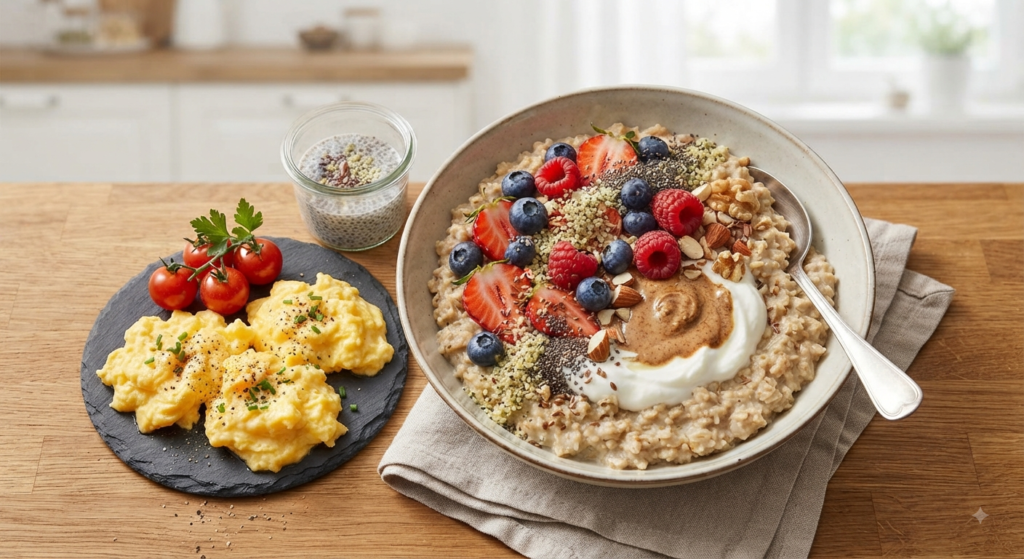
Breakfast is one of the easiest places to add real-food protein without reaching for a supplement.
The simplest combinations
- Eggs plus leafy greens or tomatoes.
- Plain Greek yogurt plus oats and a sprinkle of seeds.
- Cottage cheese plus sliced fruit.
- Tofu scramble plus whole-grain toast.
Make breakfast more filling
Protein paired with fiber-rich carbohydrates — oats, whole-grain bread, or fruit — tends to feel more satisfying than protein on its own [5][9].
Tip: Overnight oats with plain yogurt and a handful of seeds can be prepared the night before, making mornings easier without any special equipment.
High-Protein Lunch for Work or School
Lunch is where many people fall back on simple carbohydrate-heavy options because protein feels harder to prepare or pack.
Packable options
- Bean and grain bowls — cook once, pack for several days.
- Egg-based lunch boxes with raw vegetables and fruit.
- Chicken or tofu wraps with greens and hummus.
- Lentil salads that hold up without wilting.
- Plain yogurt with fruit, nuts, and a whole-grain option.
Keep food safety in mind
Perishable foods such as eggs, cooked chicken, fish, tofu, and yogurt need refrigeration [7]. If refrigeration isn’t available, consider foods that are safe at room temperature, such as canned beans rinsed and packed in a sealed container, or shelf-stable nut butter with whole-grain crackers.
High-Protein Dinners From Everyday Foods
Dinner is often the most flexible meal for building a protein-centered plate.
One-pan meals
Fish fillets, chicken thighs, firm tofu, or canned beans roasted or sautéed with vegetables require minimal equipment and limited cleanup. A drizzle of olive oil, garlic, and lemon does most of the flavor work.
Flexible bowl meals
Use this template and rotate the components throughout the week:
- Protein food — fish, chicken, lentils, beans, tofu, or tempeh.
- Whole grain or potato — brown rice, quinoa, farro, or roasted potato wedges.
- Vegetables — whatever is in the fridge or freezer.
- Sauce or healthy fat — tahini, yogurt dressing, avocado, or olive oil.
Vegetarian and Plant-Based Protein Options
Beans, lentils, peas, and soy foods
Beans, lentils, split peas, tofu, tempeh, and edamame all contribute meaningful protein to a meal. Current USDA dietary guidance specifically includes beans, peas, lentils, and soy foods in the protein foods group [1].
Nuts and seeds
Nuts and seeds add protein alongside healthy fats and nutrients. Because they’re energy-dense, they work best as part of a broader meal rather than as a standalone protein source.
Do not oversimplify “complete protein”
The idea that plant-based eaters must carefully combine specific foods at every single meal to get complete protein is outdated as a practical rule. Eating a variety of plant foods across the day generally covers the range of amino acids most people need [5][8].
Budget-Friendly Protein Foods
Here’s a list worth keeping near the grocery list:
- Eggs.
- Canned beans — black beans, kidney beans, chickpeas.
- Dried or canned lentils.
- Plain yogurt or plain Greek yogurt.
- Canned tuna or canned salmon.
- Frozen fish fillets or frozen chicken.
- Firm tofu.
- Milk or calcium-fortified soy milk.
- Peanut butter or other nut butters.
- Edamame (frozen).
Prices vary by location, store, package size, and season. Buying dried beans and lentils in bulk tends to be significantly cheaper than canned [3].
Budget Tip: Canned beans, lentils, eggs, and plain yogurt can be practical food-first options that don’t require a specialty food store or a large weekly budget.
Protein Foods Versus Protein Supplements
| Option | Possible Advantage | Limitation |
|---|---|---|
| Eggs | Versatile and easy to prepare | Not suitable for every dietary pattern |
| Beans and lentils | Protein plus fiber | May cause digestive discomfort for some people |
| Yogurt | Convenient; easy to combine with fruit | Some products contain significant added sugar |
| Fish | Protein alongside useful nutrients | Cost and sustainability vary |
| Tofu or tempeh | Flexible plant-based options | Texture and preparation may take practice |
| Protein powder | Convenient for some situations | Can be expensive; doesn’t provide food variety |
Protein powder isn’t unhealthy for most people — this guide simply focuses on food-first options [6].
How Much Protein Do You Need?
Avoid a universal target
Protein needs vary by age, body size, activity level, pregnancy, health condition, and medical advice [4][5]. Copying a social-media protein target that was designed for someone with a different body, training schedule, or health situation isn’t a useful benchmark.
Use meal structure instead of rigid math
A practical approach: include a protein-rich food in most meals and snacks, build variety across the week, and adjust portions based on hunger, energy, and how you feel. A registered dietitian can help create personalized targets for those who need specific guidance [9][10].
Important: Protein needs vary significantly. Do not apply a social-media target to your own situation without consulting a health professional.
How to Make High-Protein Meals Balanced
Protein is one part of the picture. A balanced meal also includes:
Add fiber-rich foods
Beans, lentils, vegetables, fruits, oats, and whole grains add fiber that supports digestive comfort and overall diet quality. For more on this, see our guide on fiber-rich foods to pair with protein.
Include fruits and vegetables
Aim for color variety where practical. Frozen vegetables are just as nutritious as fresh and often cheaper [1][9].
Choose minimally processed options more often
This doesn’t mean eliminating every packaged food — it means making whole-food choices the majority, not the exception [1][2].
Watch added sugar and sodium
Some flavored yogurts, canned fish, sauces, and pre-seasoned proteins contain significant added sugar or sodium. Checking the Nutrition Facts label takes about 10 seconds [7].
Common Mistakes
- Relying on protein alone — ignoring vegetables, fiber, and variety.
- Eating too few fiber-rich foods — protein without fiber can leave digestion feeling sluggish.
- Spending on expensive “fitness foods” — ordinary grocery staples cover the same ground.
- Following rigid social-media challenges — extreme protein targets aren’t appropriate for most adults.
- Ignoring medical dietary restrictions — people with kidney disease or other conditions need professional guidance before increasing protein significantly.
Who Should Ask a Professional First?
Talk with a primary care physician or registered dietitian before making major changes to protein intake if you have:
- Kidney disease.
- Certain liver conditions.
- Pregnancy or breastfeeding.
- A medically prescribed diet.
- Significant food allergies.
- A history of an eating disorder.
- Difficulty swallowing or digesting specific foods.
This doesn’t mean high-protein eating is dangerous for everyone in these groups — it means the right approach depends on individual circumstances [4][10].
Warning: Ask a clinician or dietitian before significantly increasing protein intake if you have kidney disease, a prescribed diet, or a chronic health condition.
7-Day Meal-Planning Checklist
Use this as a starting framework, not a rigid prescription:
- Choose two breakfast protein foods to rotate through the week.
- Choose three lunch protein options that pack or store easily.
- Choose three dinner protein options.
- Add at least one vegetable or fruit to each main meal.
- Include fiber-rich foods alongside protein at most meals.
- Batch-cook one protein-rich ingredient — hard-boiled eggs, lentils, or roasted chicken — to use across several days.
- Check labels for added sugar and sodium on flavored or pre-seasoned products.
When to Seek Medical Advice
Talk with your primary care physician if you notice unexplained weight loss, persistent digestive symptoms, difficulty eating enough, or concerns about following a medically restricted diet.
Summary
- Start with one food swap — swap a low-protein breakfast item for eggs, yogurt, or oats with seeds this week.
- Build variety across the week — rotating animal and plant proteins provides different nutrients and flavors.
- Balance protein with fiber and vegetables — meals work better as a system, not a single nutrient focus.
- Know when to ask for help — kidney disease, pregnancy, and certain medical conditions need professional dietary guidance.
- Skip extreme targets — consistent, varied, balanced meals tend to serve most people better than chasing a specific number.
FAQs
How can I get enough protein without protein powder?
Include a protein-rich food — eggs, beans, yogurt, tofu, lentils, fish, or poultry — in most meals. Rotating through a variety of sources across the week helps cover both protein and overall nutrition without relying on supplements [1][5].
What are the cheapest high-protein foods?
Eggs, dried or canned lentils, canned beans, plain yogurt, canned tuna, and peanut butter tend to be among the most affordable options available in most US grocery stores. Buying dried pulses in bulk can reduce costs further [3][4].
Are beans a good source of protein?
Yes — beans, lentils, and peas provide meaningful protein alongside fiber and other nutrients. USDA dietary guidelines include them as part of the protein foods group [1][4].
How can vegetarians get more protein?
Include a variety of beans, lentils, peas, tofu, tempeh, edamame, plain yogurt, eggs, nuts, and seeds across meals and snacks. Variety across the day tends to be more practical than trying to engineer every single meal [1][5].
Do I need protein powder to build muscle?
No — whole foods can provide the protein needed to support muscle health alongside resistance training. Protein powder may be useful in some situations, but it isn’t required for most people who eat a varied diet [6][9].
What should I eat with protein for a balanced meal?
Pair protein with vegetables or fruit, a fiber-rich carbohydrate such as whole grains or legumes, and a healthy fat such as olive oil, avocado, or nuts. This combination tends to feel more satisfying and provides a broader range of nutrients [1][5][9].
References
- USDA: Dietary Guidelines for Americans 2025–2030
- USDA: Nutrition Policy Reset, January 2026
- USDA FoodData Central
- MedlinePlus: Protein in Diet
- Harvard T.H. Chan School of Public Health: Protein
- NIH Office of Dietary Supplements: Dietary Supplements for Exercise and Athletic Performance
- FDA: Using the Nutrition Facts Label
- NHS: Protein
- Mayo Clinic: Nutrition and Healthy Eating
- NIDDK: Healthy Eating and Nutrition
Educational Disclaimer
This article is for educational purposes only and is not medical advice. Protein needs vary by individual health status, age, body size, activity, and medical conditions. For personal dietary guidance, talk to your primary care physician or a registered dietitian. Call 911 for emergencies.