
By Pulsvia Team

Social media is currently full of people competing to eat as much fiber as possible — a trend some are calling “fibermaxxing.” If that sounds extreme, it probably is for most of us.
The real question most people are asking is simpler: how to increase fiber intake without ending up bloated and uncomfortable for three days.
This guide skips the challenge culture and focuses on practical, gradual steps using ordinary foods you can find at any grocery store. No powder stacks. No unrealistic daily targets. Just steady progress.
Key Takeaways
- Increase fiber gradually — large, sudden changes are a common cause of gas and bloating.
- Variety matters as much as volume — different plant foods provide different types of fiber.
- Whole foods are usually the best starting point before considering supplements.
- Drink fluids normally — there’s no need to force excessive water alongside fiber.
- Seek medical advice for persistent bloating, blood in the stool, or unexplained symptoms.
Start With a Manageable Fiber Increase
Fiber is a type of carbohydrate found mainly in plant foods that the body does not fully digest. To increase fiber intake comfortably, add fiber-rich foods gradually, vary your sources, drink fluids normally, and monitor how your body responds [4][10].
Why “more” is not always “better”
Increasing fiber rapidly can cause gas, bloating, cramping, or abdominal discomfort for some people — particularly when the gut hasn’t had time to adjust [5][10]. The discomfort is usually temporary, but it’s discouraging enough that many people give up entirely.
The practical goal
The aim isn’t to hit a dramatic number or win a social-media challenge. A more useful goal is building a varied, sustainable eating pattern that your body can adapt to comfortably over days and weeks [1][10].
What Fiber Does in the Diet
Soluble fiber
Soluble fiber dissolves or swells in water, forming a gel-like texture during digestion. Good sources include oats, beans, lentils, apples, pears, and some seeds such as flaxseed [4][6].
Insoluble fiber
Insoluble fiber doesn’t dissolve — it adds bulk and helps keep things moving through the digestive system. You’ll find it in whole grains, nuts, seeds, and the skins of many vegetables [4][6].
Why food variety matters
Different plant foods provide different types and combinations of fiber, alongside vitamins, minerals, and other compounds that work together in ways supplements can’t fully replicate [6][10].
Did You Know? Current fiber interest is shifting from simply eating more toward choosing different fiber types and food sources — a move away from quantity-first thinking [see FoodNavigator trend data cited in Sources].
Quick Wins for This Week
Start here. No major meal overhauls needed.
Add one high-fiber food to breakfast
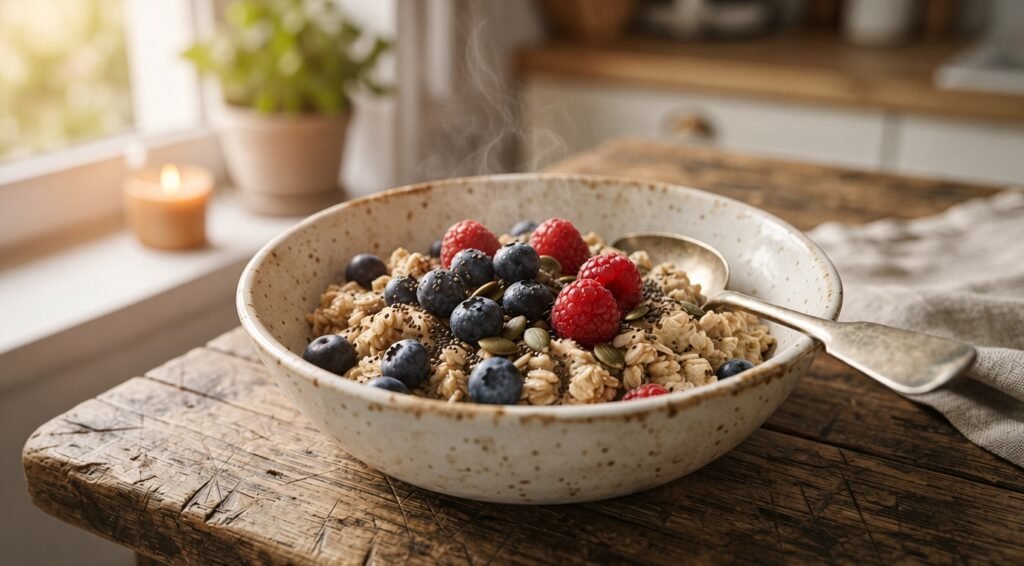
Pick any of these:
- Rolled oats or overnight oats.
- Berries stirred into yogurt.
- A tablespoon of chia seeds mixed into oats.
- Whole-grain toast instead of white bread.
Add beans or lentils to one meal
A small serving — a few spoonfuls in a soup or on a salad — is enough to start. You don’t need a full bowl on day one.
Keep fruit available
Whole fruit is more practical than juice as a fiber source because the fiber content is better preserved [4][5].
Quick Win: Add one fiber-rich food to a meal you already eat. That’s it. One change this week is enough.
Increase Fiber Gradually
A simple seven-day transition plan
This is a general educational plan to illustrate a gradual approach — not a medical prescription.
| Days | Simple Action |
|---|---|
| Days 1–2 | Add one extra fruit or vegetable serving to a meal |
| Days 3–4 | Replace one refined grain with a whole-grain option |
| Days 5–6 | Add a small serving of beans, lentils, or peas |
| Day 7 | Review comfort; continue the habits that worked |
Tip: Increase fiber gradually rather than changing every meal at once. Your digestive system needs time to catch up.
Pair Fiber With Fluids
Why hydration matters
Fluids support normal digestion, particularly when eating more fiber [5][10]. Fiber absorbs water as it moves through the gut — without enough fluid, it can have the opposite of the intended effect.
Avoid forcing excessive water
Drink according to normal thirst, activity level, climate, and any medical guidance you’ve already received. There’s no need to force large volumes of water beyond what feels comfortable.
Best Fiber-Rich Foods for Beginners
| Food | Practical Serving Idea |
|---|---|
| Oats | Breakfast porridge or overnight oats |
| Berries | Add to yogurt, cereal, or oats |
| Apples or pears | Eat whole with the skin when comfortable |
| Beans or lentils | Add to soup, salad, or grain bowls |
| Chia or flaxseed | Add a small amount to oats or yogurt |
| Potatoes with skin | Serve with vegetables and a protein source |
| Whole-grain bread | Use in sandwiches or as toast |
| Broccoli, carrots, or peas | Add to lunch or dinner |
These foods are widely available, budget-friendly, and practical for most households [1][8][9].
How to Reduce Bloating When Eating More Fiber
A little adjustment discomfort is common when adding fiber — but it’s usually manageable.
Increase one change at a time
Adding multiple new foods in the same week makes it harder to identify what’s causing symptoms [5][10].
Start with smaller portions
A quarter-cup of beans is a reasonable starting portion for someone who rarely eats them. Build up from there over several days.
Chew thoroughly and eat slowly
Slowing down gives digestive enzymes more time to work and may reduce gas production for some people [10].
Track foods that cause symptoms
Keep a basic note of which foods seem to cause discomfort and when. Not every high-fiber food affects everyone the same way.
Fibermaxxing: Useful Idea or Risky Challenge?
What the trend gets right
Encouraging people to eat more varied plant foods can genuinely improve overall diet quality for many adults. More vegetables, legumes, and whole grains is usually a sound goal [1][6].
What the trend gets wrong
Dramatic, rapid increases — particularly from powders, multiple supplements, or extreme daily challenges — can cause real digestive discomfort and may be unsuitable for people with certain health conditions [5][10].
Avoid treating fiber as a competition
Important: Fiber supplements are not automatically better than food, and stacking multiple fiber products can lead to uncomfortable or unexpected symptoms. More is not always more.
Food Versus Fiber Supplements
When food is the better starting point
Whole foods bring fiber alongside vitamins, minerals, and other plant compounds that work together in ways isolated supplements cannot easily replicate [6][10].
When to ask a clinician or dietitian
Some people have conditions that require personalized guidance before significantly changing their diet. This includes people with:
- Digestive diseases such as Crohn’s disease, ulcerative colitis, or irritable bowel syndrome.
- Difficulty swallowing.
- Narrowing of the bowel.
- Medically prescribed dietary restrictions.
A registered dietitian can help design an approach that fits individual needs without causing harm [4][5].
Fiber and Health Claims
What can be said responsibly
A diet that regularly includes fiber-rich foods is associated with overall diet quality and may support digestive comfort and cardiometabolic health as part of a balanced eating pattern [1][4][6].
What should not be promised
Increasing fiber alone does not prevent, cure, or treat diabetes, high blood pressure, heart disease, or cancer. Dietary patterns and overall lifestyle both matter [4][6].
For a broader look at food and health, see our guide on whole-food nutrition for heart health.
When to Seek Medical Advice
Talk with your primary care physician if you experience:
- Persistent or severe bloating that doesn’t improve.
- Blood in the stool.
- Unexplained weight loss.
- Persistent vomiting.
- Severe abdominal pain.
- A significant change in bowel habits.
- Symptoms that worsen after dietary changes.
- Known digestive disease.
Warning: Seek medical care for blood in the stool, severe abdominal pain, or unexplained weight loss. These symptoms need prompt evaluation and are not diet questions.
Summary
- Start with one food change, not a complete overhaul — small steps stick better and cause fewer side effects.
- Choose variety over volume — mixing soluble and insoluble fiber sources is more sustainable than maximizing one food.
- Track what works for your body specifically, rather than following a generic social-media target.
- See a doctor or dietitian if symptoms are persistent, severe, or happen alongside other unexplained changes.
- Avoid treating fibermaxxing as a competition — a gradual, food-first approach is safer and more likely to last.
FAQs
How can I increase fiber intake quickly but safely?
The safest approach is to add one new fiber-rich food or slightly larger serving every few days, rather than overhauling everything at once. Starting with foods you already enjoy — like oats, fruit, or beans — makes it easier to maintain [5][10].
Why does eating more fiber cause bloating?
When fiber intake increases rapidly, gut bacteria ferment the extra fiber and produce gas as a byproduct. Gradual increases give the gut time to adapt, which typically reduces this effect [5][10].
Is it better to get fiber from food or supplements?
Whole foods are generally a better starting point because they provide fiber alongside other nutrients. Supplements can be useful in specific situations, but a clinician or dietitian should guide that decision [4][6].
Can too much fiber be harmful?
For most healthy adults, eating a wide variety of fiber-rich whole foods is unlikely to cause harm, though rapid increases can cause digestive discomfort. People with certain gastrointestinal conditions should seek personalized guidance before making major changes [4][5].
What is the difference between soluble and insoluble fiber?
Soluble fiber dissolves in water and is found in oats, beans, and fruit. Insoluble fiber adds bulk and is found in whole grains, nuts, and vegetables. Both types are useful, and most plant foods contain a mix [4][6].
How long does it take for the body to adjust to more fiber?
Adjustment time varies by individual, starting point, and how gradually the increase is made. Some people notice improvement within a week or two; others may take longer. If symptoms remain severe or persistent, medical advice is appropriate [10].
References
- USDA: Dietary Guidelines for Americans 2025–2030
- USDA: Eat Real Food Press Release, January 2026
- NIH Office of Dietary Supplements: Dietary Fiber
- MedlinePlus: Dietary Fiber
- NIDDK: Eating, Diet, and Nutrition for Constipation
- Harvard T.H. Chan School of Public Health: Fiber
- FDA: Daily Value on the Nutrition and Supplement Facts Labels
- USDA FoodData Central
- NHS: How to Get More Fiber Into Your Diet
- Mayo Clinic: Dietary Fiber — Essential for a Healthy Diet
Educational Disclaimer
This article is for educational purposes only and is not medical advice. The seven-day plan is a general illustration of gradual change and is not a prescribed diet or treatment. For personal care, talk to your primary care physician or a registered dietitian, especially if you have a digestive condition, take medication, or have persistent symptoms. Call 911 for emergencies.