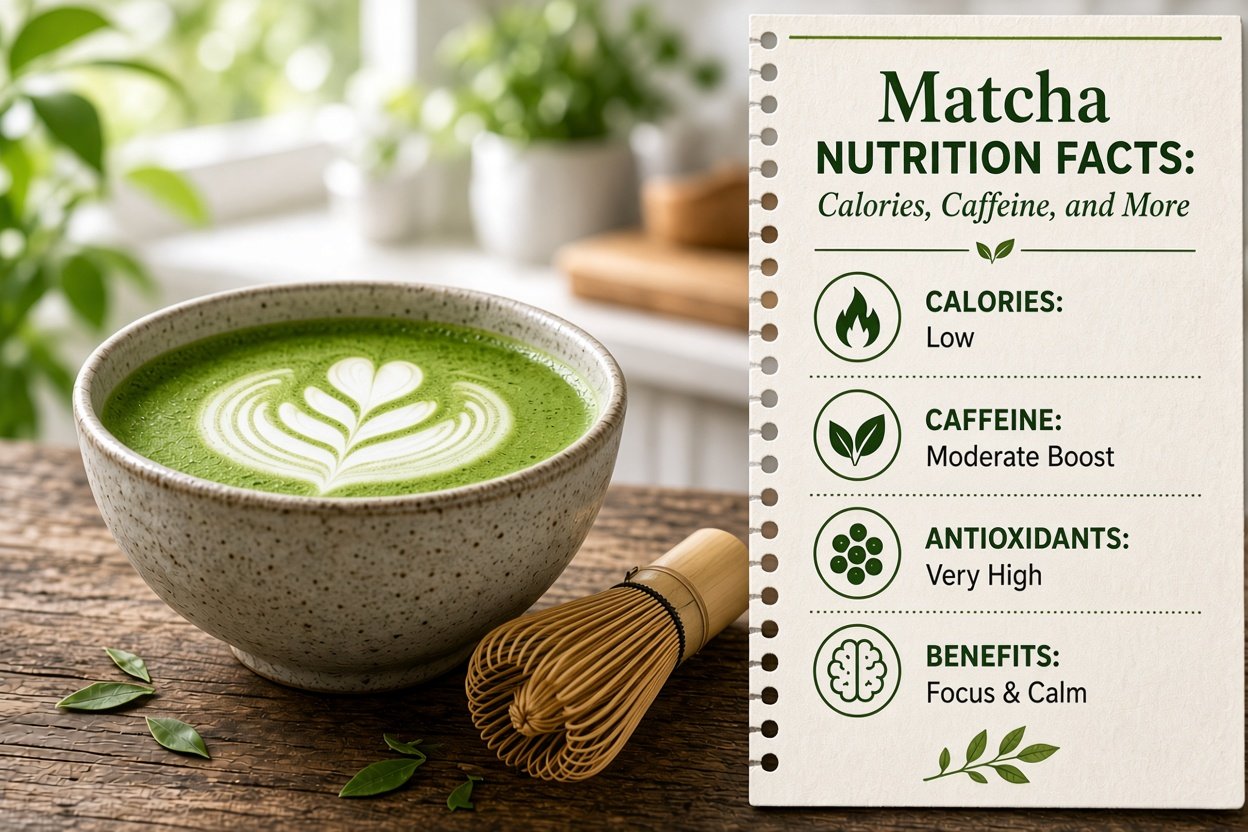
Matcha has become one of the most searched beverages of 2026 — turning up in iced lattes, smoothie bowls, café menus, and dessert recipes. But with all that buzz comes a lot of overclaiming.
Understanding matcha nutrition facts gives you something more useful than a list of supposed benefits: a clear picture of what’s actually in the drink, how caffeine compares across popular beverages, and what the Nutrition Facts label is really telling you.
This guide keeps things factual, practical, and grounded in reliable sources.
Key Takeaways
- Matcha contains caffeine — amounts vary by brand, serving size, and preparation method.
- Plain powder differs from café lattes — syrups, milk, and sweeteners change the nutritional picture significantly.
- Most health claims are promising but not proven — matcha is not a detox, fat-burner, or disease prevention tool.
- Some people should limit caffeine — pregnancy, anxiety, and certain medications call for professional guidance.
- The Nutrition Facts label is your best guide — check serving size, added sugar, and caffeine before buying.
What Is Matcha?
Matcha is powdered green tea made from specially processed tea leaves. Plain matcha contains caffeine and plant compounds called catechins, while matcha lattes and bottled drinks may contain added milk, sugar, syrups, or other ingredients that substantially change their nutrition [5][7].
Because the whole powdered leaf is consumed — rather than steeped and discarded — matcha delivers more of the tea plant’s compounds per serving than a typical brewed green tea.
Is Matcha Healthy?
Plain, unsweetened matcha can fit into a balanced diet for most people. Whether it’s a healthy choice for you depends on serving size, caffeine sensitivity, how it’s prepared, and the rest of what you eat and drink each day [2][10].
Matcha Nutrition Facts at a Glance
Quick Win: Compare the added sugar on a plain matcha label against a café-style matcha latte. The gap is often bigger than most people expect.
Plain Matcha Powder
Exact values vary by brand, grade, and serving size. Check the Nutrition Facts label on your specific product, or look up the ingredient in USDA FoodData Central [7]. A small serving of plain matcha powder mixed with water is very low in calories on its own.
Matcha Latte
Add milk, syrups, cream, or flavored powder and the nutritional profile can shift substantially — sometimes by hundreds of calories and multiple teaspoons of added sugar [8].
| Drink | Main Variable | What to Check |
|---|---|---|
| Plain matcha with water | Matcha powder amount | Powder serving size |
| Matcha with unsweetened milk | Milk type | Calories and protein |
| Café matcha latte | Milk and syrup | Added sugar and portion size |
| Bottled matcha drink | Product formula | Added sugar and caffeine |
| Matcha smoothie | Fruit and sweeteners | Total calories and sugar |
How Much Caffeine Is in Matcha?
Why Caffeine Varies
Matcha caffeine is not a single universal number. It depends on:
- How much powder is used per serving.
- Brand, grade, and growing region.
- Preparation method — whisked with water versus steamed into a latte.
- Total serving size of the finished drink.
- What else is blended in.
Matcha Versus Coffee
The FDA states that 400 mg of caffeine per day is an amount not generally associated with negative effects in most healthy adults — though individual sensitivity varies considerably, and this is not a personal daily target [1].
A standard cup of drip coffee typically contains more caffeine than a small serving of plain matcha. A large café matcha drink with extra powder, however, can close that gap meaningfully
| Beverage | Caffeine Pattern | Key Variable |
|---|---|---|
| Plain matcha (whisked) | Moderate; varies by powder amount | Grams of powder used |
| Brewed green tea | Often lower per cup | Steep time and leaf amount |
| Drip coffee | Often higher per serving | Bean type and brew method |
| Espresso | High per ounce; varies per drink | Number of shots |
| Bottled matcha drink | Varies by product | Check the label |
Matcha Versus Green Tea
Because matcha powder is consumed whole, a prepared serving typically delivers more caffeine than a comparable cup of brewed green tea — though exact amounts depend on product and preparation method [9].
Antioxidants and Catechins
What Research Suggests
Matcha contains catechins — a type of plant compound — along with other substances of interest to nutrition researchers [6]. Some studies have reported associations with antioxidant activity and related markers, though the research landscape is still developing.
What Research Does Not Prove
A critical review of matcha’s therapeutic potential found that evidence for specific health effects remains limited and results vary widely between studies and populations [4]. Harvard T.H. Chan School of Public Health notes that green tea research is promising in areas but cautions against overstating health claims [10].
Did You Know? Matcha uses the whole powdered tea leaf, while brewed green tea involves steeping leaves that are then removed — giving matcha a different compound profile per serving [5].
Matcha does not detoxify the body, reliably cause weight loss, prevent cancer, or treat inflammation. Evidence is limited for these specific claims [4].
Added Sugar in Matcha Drinks
Plain Matcha Versus Café Drinks
Matcha powder itself contains no added sugar. The issue is everything added around it. Syrups, sweetened milks, flavored powders, and whipped toppings can turn a low-calorie beverage into something nutritionally closer to dessert [8].
Label-Reading Checklist
Before ordering or buying, check the Nutrition Facts panel for:
- Added sugar — listed in grams; daily context depends on your overall diet.
- Serving size — is the data listed per serving or per whole bottle?
- Milk type — whole, oat, and sweetened varieties each differ in calories.
- Syrups — vanilla, honey, caramel, and others add sugar quickly.
- Cream or toppings — whipped cream adds fat and calories.
- Total caffeine — if listed.
- Powder blend — is it plain matcha or a sweetened, flavored blend?
Matcha for Energy and Focus
Caffeine and Alertness
Caffeine — including the caffeine in matcha — may improve alertness and reduce perceived fatigue for some people [1][2]. Some individuals find matcha easier to tolerate than coffee, but this is not a universal experience and is not guaranteed by the drink’s green color.
Avoid “Calm Energy” Guarantees
Matcha should not be described as automatically anxiety-free, crash-free, or soothing for everyone. Caffeine is caffeine. At sufficient doses it can cause jitteriness, restlessness, or a faster heart rate in sensitive people [2].
Important: Matcha contains caffeine in every serving, even when it tastes less bitter than coffee.
Is Matcha Suitable for Everyone?
People Who May Need Caution
Plain matcha as an everyday food or beverage is different from high-dose green-tea extracts or concentrated supplements. Seek professional guidance before using matcha regularly if you are:
- Pregnant or breastfeeding.
- A child or adolescent.
- Sensitive to caffeine or prone to jitteriness.
- Managing certain heart-rhythm concerns.
- Experiencing anxiety or panic symptoms that caffeine worsens.
- Taking medications affected by caffeine or green-tea compounds.
- Considering concentrated green-tea extract supplements rather than ordinary powder.
Warning: Do not confuse ordinary matcha powder with concentrated green-tea extract supplements. These are different products with different intake levels and risk profiles.
How to Choose a Better Matcha Drink
Lower-Sugar Options
Plain matcha mixed with water or an unsweetened milk is the simplest way to keep added sugar low. At a café, asking for fewer pumps of syrup or an unsweetened preparation is practical and usually straightforward.
Avoid Unnecessary “Health Halo” Claims
A green color, a “ceremonial grade” label, or wellness-adjacent marketing language does not automatically make a product nutritious or low in sugar [8]. The Nutrition Facts panel provides more reliable information than anything on the front of the package.
How to Prepare Matcha at Home
Basic Unsweetened Preparation
Keep it simple:
- Follow the serving-size instructions on your specific product.
- Whisk with hot or cold water, or a milk of your choice.
- Taste before adding sweetener — many people find plain matcha enjoyable on its own.
- Monitor your own caffeine response, especially if new to matcha.
- Avoid drinking it close to bedtime if you notice sleep disruption.
Hot Versus Iced Matcha
Temperature doesn’t determine whether a drink is healthy or not. The ingredients and total serving size matter considerably more. An iced matcha with unsweetened oat milk is nutritionally very different from a hot matcha with full-sugar syrup and whipped cream.
Matcha and Sleep
Why Timing Matters
Caffeine has an approximate half-life of five to six hours in most adults, meaning matcha consumed at 4 p.m. may still have active caffeine in the body by 9 or 10 p.m. [2]. For people who are caffeine-sensitive, this can delay sleep onset or fragment overnight sleep.
For more on caffeine’s effect on nighttime rest, see our guides on caffeine timing and sleep habits and late caffeine and nighttime waking.
A Practical Cutoff
There is no single cutoff that applies to every person. If you notice matcha seems to disrupt your sleep, try moving your last serving earlier in the day and tracking whether sleep improves over one to two weeks.
Common Matcha Myths
“Matcha is caffeine-free.” False. Matcha contains caffeine in every serving [1].
“Matcha automatically causes weight loss.” No reliable clinical evidence supports this as a general claim for most adults [4].
“More matcha means more health benefits.” Not necessarily — more powder also means more caffeine and potentially more unwanted side effects.
“All matcha lattes are healthy.” Not automatically. Added sugar, syrup, and large serving sizes significantly change the nutritional profile [8].
When to Ask a Healthcare Professional
Talk with your primary care physician if you experience palpitations, worsening anxiety, or persistent sleep disruption after drinking matcha. Professional advice is also appropriate for:
- Pregnancy-related caffeine questions.
- Medication interactions involving caffeine or green-tea products.
- Adverse reactions after consuming matcha.
- Interest in concentrated green-tea extract supplements.
Summary
- Check the label before the marketing — added sugar, serving size, and caffeine are the three numbers that matter most.
- Plain matcha is nutritionally very different from a sweetened café latte — the powder is not the problem; the additions are.
- Research is developing, not conclusive — no disease-prevention or weight-loss claims are reliably supported.
- Caffeine timing matters — if you’re sensitive, keep matcha to the earlier part of your day.
- Some people need professional guidance — pregnancy, anxiety, heart conditions, and certain medications call for a clinician’s input before regular matcha use.
FAQs
Is matcha healthier than coffee?
It depends on how both drinks are prepared. Plain unsweetened matcha and black coffee are both low in calories. A sweetened matcha latte, however, may contain significantly more added sugar than a plain coffee. Caffeine amounts also vary by preparation [1].
How much caffeine is in one serving of matcha?
Amounts vary by brand, powder quantity, and preparation method. Plain matcha typically contains less caffeine per serving than a standard cup of drip coffee, though more than many brewed green teas. Check your product label for specific figures [5][7].
Does matcha have more caffeine than green tea?
Often yes. Because matcha uses the whole powdered leaf rather than steeping and discarding leaves, a prepared serving typically delivers more caffeine than a comparable cup of brewed green tea — though both vary by product and preparation [5][9].
Is matcha high in calories?
Plain matcha powder mixed with water is very low in calories. Café-style matcha lattes with full-fat milk, syrups, and sweeteners can add substantially more [7][8].
Can matcha affect sleep?
Yes, for people sensitive to caffeine. Matcha consumed in the afternoon or evening may delay sleep onset or disrupt overnight sleep quality [2].
Who should avoid or limit matcha?
People who are pregnant, breastfeeding, under 18, caffeine-sensitive, or managing anxiety, heart-rhythm concerns, or certain medication regimens may benefit from limiting matcha or seeking professional guidance before regular use [1][2].
References
- FDA: How Much Caffeine Is Too Much?
- Mayo Clinic: Caffeine — How Much Is Too Much?
- Mayo Clinic: Caffeine — Is It Dehydrating?
- NIH/PMC: Therapeutic Potential of Matcha — Critical Review
- NIH/PMC: Matcha Green Tea — Health Benefits and Chemical Composition
- NIH/PMC: Daily Matcha and Caffeine Intake Study
- USDA FoodData Central
- FDA: Nutrition Facts Label
- NHS: Caffeine, Food and Drinks
- Harvard T.H. Chan School of Public Health: Tea
Educational Disclaimer
This article provides general nutrition information and does not diagnose or treat any medical condition. Caffeine sensitivity varies. Speak with a qualified healthcare professional if you are pregnant, have a heart condition, take medication, experience palpitations or severe anxiety, or have persistent sleep problems.
This article is for educational purposes only and is not medical advice. For personal care, talk to your primary care physician. Call 911 for emergencies.