
By Pulsvia Team
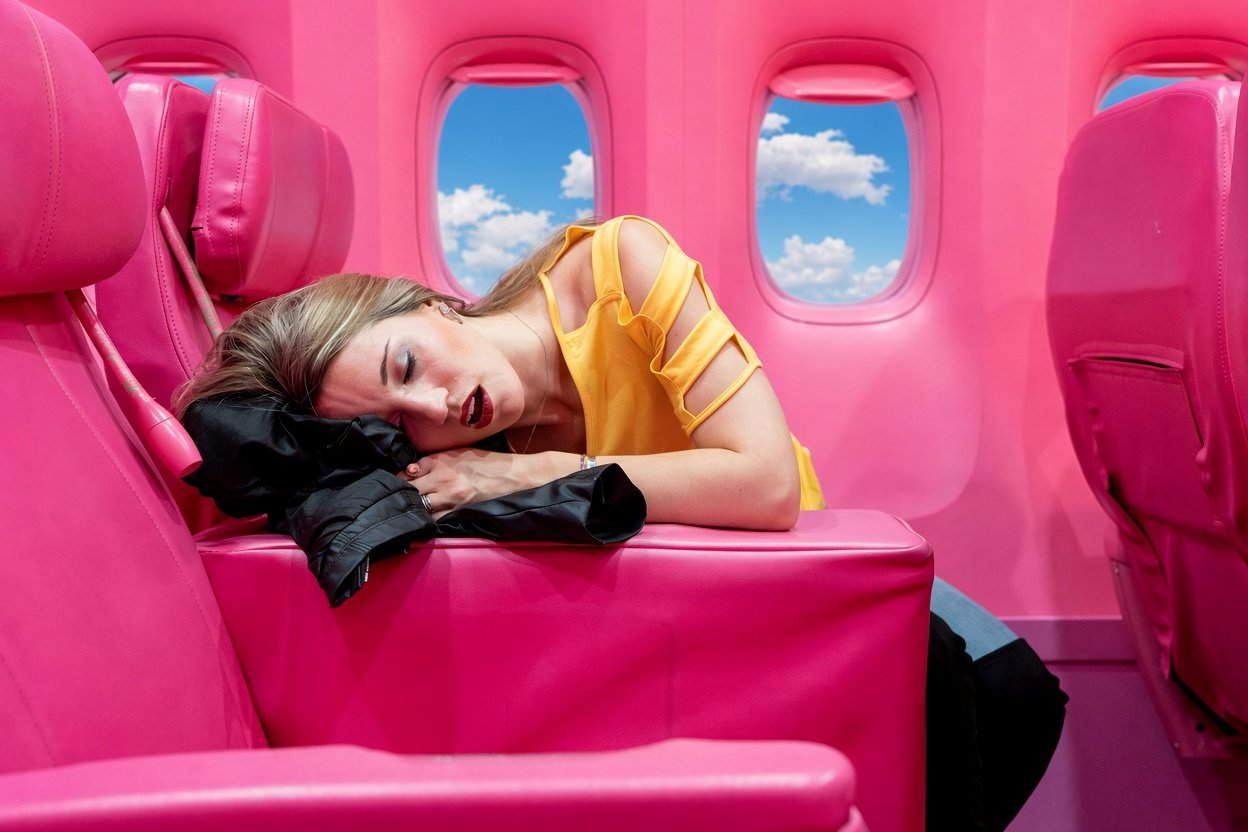
You board a six-hour overnight flight, tuck a flimsy pillow behind your head, and spend the next five hours watching other passengers sleep while you stare at the seat-back screen.
Learning how to sleep well on a plane is less about finding the perfect gadget and more about making a few smart decisions before you even board. Seat choice, timing, food, light, and noise all matter — and most of them are in your control.
This guide breaks it down with 13 practical, flight-tested tips.
Key Takeaways
- Plan your sleep window around the destination, not just the flight schedule.
- Pack a simple sleep kit — eye mask, earplugs, and neck support make a real difference.
- Limit alcohol and caffeine before your planned sleep window on the flight.
- Keep your seatbelt visible over your blanket so crew don’t need to wake you.
- Avoid new sleep medication on a flight — save any trial run for home first.
Quick Wins Before Boarding
Sleeping well on a plane usually requires planning rather than relying on a sedative or a single travel product. Choose a suitable sleep window, reduce light and noise, support your neck, limit alcohol and late caffeine, stay reasonably hydrated, and coordinate in-flight sleep with the destination time zone [1][5].
Pack a simple sleep kit
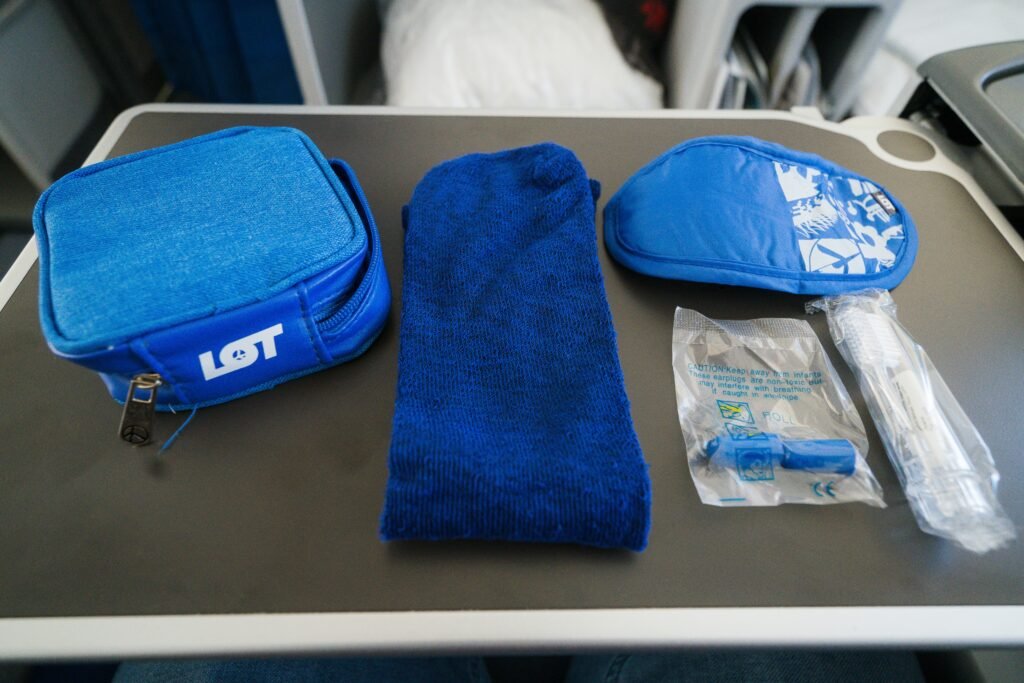
You don’t need a luxury travel set — just the basics:
- Eye mask.
- Earplugs or noise-reducing headphones.
- Neck support that actually fits your neck.
- A light layer or compact travel blanket.
- Comfortable, non-restrictive clothing.
- A water bottle.
Quick Win: Prepare your eye mask, earplugs, neck support, and water before boarding so you’re not digging through your carry-on at 30,000 feet.
Decide whether you want to sleep
Not every flight calls for sleep. The right decision depends on how long the flight is, what time it is at your destination, and whether sleeping now will make things easier or harder when you land.
Plan Sleep Around the Destination Time
Flights lasting only a few hours
On a short daytime flight, forcing sleep may not be worth the effort — especially if you need to be alert shortly after landing. Staying awake and arriving on a normal schedule can sometimes work better.
Overnight or long-haul flights
A planned sleep window makes more sense here, particularly when it overlaps with nighttime at your destination [1][4].
Eastbound versus westbound travel
CDC guidance indicates that sleep and light timing should be adjusted according to travel direction and the destination schedule [1]. Eastbound travel typically requires shifting sleep earlier, which many people find harder. Westbound travel tends to be more forgiving. For more on this, see our guide on how to fix jet lag.
Choose the Best Seat for Sleeping
Seat choice is one of the most underrated decisions in travel sleep planning. Here’s an honest look at the trade-offs:
| Seat | Potential Advantage | Potential Drawback |
|---|---|---|
| Window | Lean against the wall; avoid being woken for aisle traffic | May need to disturb others to get up |
| Middle | Some protection from window light and aisle | Less personal space; limited support |
| Aisle | Easier bathroom access; more movement | More interruptions from passengers and crew |
| Exit row | Additional legroom on some aircraft | Restrictions apply; more activity nearby |
| Bulkhead | No seat directly in front | Tray tables, bassinets, or crew activity may disrupt |
No seat is perfect for every traveler or every situation [5].
Create a Comfortable Sleep Position
Support your neck
A travel pillow can help some people, but shape, firmness, and fill make a big difference. If you’ve had one gather dust in a closet before, a different style might work better — or none at all.
Recline respectfully and safely
Follow crew instructions. Reclining during meal service or when the passenger behind you is eating can create friction. Be aware of the space you’re using.
Important: Keep your seatbelt fastened and visible over your blanket so crew members can see it during turbulence or safety checks without waking you.
Keep your seatbelt visible
Wearing the seatbelt loosely over a blanket is safer than having crew disturb your sleep during routine checks [5][9].
Control Light and Noise
Use an eye mask
Cabin lights, other passengers’ screens, and window light can interfere with sleep even when your eyes are closed. An eye mask is one of the simplest, cheapest tools available [5].
Did You Know? Sleep Foundation recommends eye masks and earplugs or headphones as practical tools for sleeping on a plane [5].
Use earplugs or headphones safely
Noise reduction can help significantly on long flights. Keep awareness of safety announcements — don’t block out all sound entirely.
Reduce screen stimulation
Switch to a book, calm audio, or a simple body-scan routine around 20–30 minutes before your planned sleep window. Bright screens can work against the calm you’re trying to build.
Eat and Drink Strategically

Choose a lighter meal before sleep
A large meal right before trying to sleep can leave you uncomfortable in an already-cramped seat.
Limit alcohol
This one’s worth being direct about: alcohol may feel relaxing at first, but it tends to fragment sleep and worsen overall sleep quality. CDC specifically advises minimizing alcohol during air travel [1].
Warning: Do not combine alcohol with sedatives or sleep medication. This combination can be dangerous.
Did You Know? Alcohol may help you fall asleep faster but increases sleep fragmentation during the night [1].
Use caffeine carefully
If caffeine normally keeps you awake, avoid it in the hours before your planned sleep window — the same principle that applies at home applies at altitude.
Stay hydrated normally
Drink fluids throughout the flight, but don’t force large amounts immediately before trying to sleep.
Avoid Using Sleep Medication Casually
Do not try a new sedative on a flight
A flight is not the place to test a sleep medication for the first time. Reactions vary, and side effects — including prolonged grogginess, dizziness, or impaired coordination — can create problems in a confined space [1].
Ask a clinician if considering a sleep aid
CDC advises avoiding sedative medications with long half-lives in the context of jet lag management [1]. If you’re considering any medication — prescription, over-the-counter antihistamine, or supplement — a conversation with a pharmacist or clinician before your trip is the safest approach.
Use Relaxation Without Pressure
Try slow, natural breathing
Gentle, unhurried breathing can help the body ease toward rest. Skip breath-holding techniques or any exercise that feels uncomfortable.
Use a familiar audio routine
A calm audiobook, meditative audio, or a guided body scan may help you relax — particularly if it’s something you already use at home.
Do not chase perfect sleep
Lying quietly with your eyes closed and your body at rest still has value. If sleep doesn’t come, that’s okay. Checking the flight tracker every few minutes or worrying about how much sleep you’re getting tends to make things harder, not easier.
Plan for Different Flight Types
| Flight Type | Sleep Approach |
|---|---|
| Short daytime flight | Stay on a normal schedule unless you’re genuinely tired |
| Overnight flight | Sleep during the destination’s nighttime when practical |
| Long-haul eastbound flight | Consider adjusting bedtime earlier before travel |
| Long-haul westbound flight | A later sleep schedule may be easier for some travelers |
| Multiple connections | Protect short rest opportunities without missing boarding |
What to Do After Landing
Switch to local time gradually or promptly
CDC recommends using the destination’s schedule when the time-zone difference is significant, though the best approach may depend on your trip length and direction [2].
Get appropriate daylight
Natural light at the destination can help the body recognize local daytime. Timing matters — morning light tends to be most useful when you’ve traveled east, while afternoon light can help after westbound flights [1][3].
For more on using light to support sleep timing, see our guide on morning light for sleep.
Avoid long daytime naps
CDC recommends against lengthy naps after arrival because they can make nighttime sleep harder [1]. A short rest — 20 to 30 minutes — may be more practical if you’re struggling to stay awake during the day.
When to Seek Medical Advice
Talk with your primary care physician if you experience:
- Persistent severe sleep problems after travel.
- Extreme daytime sleepiness that doesn’t improve after a few days.
- Breathing pauses, gasping, or choking during sleep.
- Repeated reliance on medication to sleep while traveling.
- Symptoms that affect driving, work, or daily safety.
Safety note: Never drive after arrival if you are severely sleepy. Arrange a safe ride or rest before getting behind the wheel.
Summary
- Build the routine before you board — seat choice, kit, and sleep timing all start on the ground.
- Alcohol is not a sleep tool on a flight — it may feel like one but tends to make sleep worse.
- Match your sleep window to the destination, especially on long-haul and overnight flights.
- Skip new sleep medication during travel — test anything new at home first with medical guidance.
- Get daylight and avoid long naps after landing to help your body settle into the local schedule.
FAQs
What is the best seat on a plane for sleeping?
A window seat is often preferred because you can lean against the cabin wall and avoid being woken by aisle traffic. That said, the best seat depends on your personal preferences, how often you need the restroom, and what’s available on the aircraft [5].
How can I sleep on a plane without medication?
Pack an eye mask and earplugs, choose a window seat when possible, time your sleep around the destination’s local night, eat lightly before sleeping, avoid alcohol and late caffeine, and use a familiar relaxation routine before your sleep window [1][5].
Is it safe to take a sleeping pill on a flight?
Trying a new sedative for the first time on a flight is not recommended. Side effects like prolonged drowsiness or impaired coordination can be problematic in a confined aircraft environment. CDC advises caution around sedatives with long half-lives for travel-related sleep use. Talk to a clinician before using any sleep aid for travel [1].
Should I sleep on the plane to avoid jet lag?
It depends on your destination’s local time and travel direction. Sleeping during the flight isn’t always the best strategy for jet lag — what matters more is whether that in-flight sleep aligns with your destination’s nighttime [1][2][4].
What should I bring to sleep comfortably on a plane?
A practical kit includes an eye mask, earplugs or noise-reducing headphones, a neck pillow that fits your body, a light blanket or extra layer, comfortable clothing, and water [5][6].
References
- CDC Yellow Book: Jet Lag Disorder
- CDC Travelers’ Health: Jet Lag
- AASM: Circadian Rhythm Practice Parameters
- AASM Sleep Education: Jet Lag
- Sleep Foundation: How to Sleep on a Plane
- Sleep Foundation: Travel and Sleep
- Cleveland Clinic: Jet Lag
- Mayo Clinic: Jet Lag Disorder
- CDC: Air Travel and Health
- NHS: Jet Lag
Educational Disclaimer
This article provides general travel and sleep information and does not replace medical advice. Ask a qualified healthcare professional before using sleep medication, melatonin, or other sleep aids — particularly if you take prescription medicines, have a medical condition, or are pregnant.
Safety note: Never combine alcohol with sedatives or sleep medication. Follow crew instructions at all times. Do not drive after arrival if you are severely sleepy.
This article is for educational purposes only and is not medical advice. For personal care, talk to your primary care physician. Call 911 for emergencies.