

You roll out of bed, grab coffee, and head straight into a dim kitchen with the blinds still shut. Sound familiar?
Morning light for sleep is a simple idea that’s gaining attention in 2026 sleep research: getting natural daylight early in the day may help set your body’s internal clock for the night ahead.
This guide walks through practical ways to work morning light into your routine — no special equipment required, and no promises of an overnight fix.
Key Takeaways
- Get outside soon after waking when practical — even a short walk may help.
- Consistency matters more than perfection — a regular wake time supports the routine.
- Cloudy days still count — outdoor light usually beats indoor lighting, even without sun.
- Timing shifts for shift workers and travelers — one approach doesn’t fit every schedule.
- Never stare directly at the sun — face your surroundings, not the sky.
Quick Wins for Tomorrow Morning
Morning light for sleep is the use of natural daylight early in the day to support a consistent sleep-wake schedule. It may help reinforce circadian timing, especially when combined with a regular wake time, but the ideal timing depends on your schedule, season, location, and individual sleep pattern.
Step outside soon after waking
Getting natural outdoor light shortly after you wake up can be a useful habit, when your schedule allows for it. There’s no single universal time or duration that works for everyone.
Keep the routine consistent
Waking up around the same time each day tends to make morning-light exposure easier to repeat — and repetition seems to matter more than any one perfect morning.
Do not stare directly at the sun
Warning: Never look directly at the sun, even briefly. Face your ordinary outdoor surroundings — a yard, a street, a park — rather than the sky itself.
How Morning Light May Support Sleep Timing
The relationship between light and the body clock
Light is one of several signals your body uses to manage its internal clock, sometimes called the circadian rhythm — the roughly 24-hour cycle that influences when you feel awake or sleepy [5].
Why morning and evening light are different
Morning light and late-evening light appear to affect the timing of this internal clock differently, according to sleep researchers [1]. This doesn’t mean morning light acts as a treatment for any specific sleep condition — it’s simply one input among many that may support a regular schedule.
How to Get Morning Light Naturally
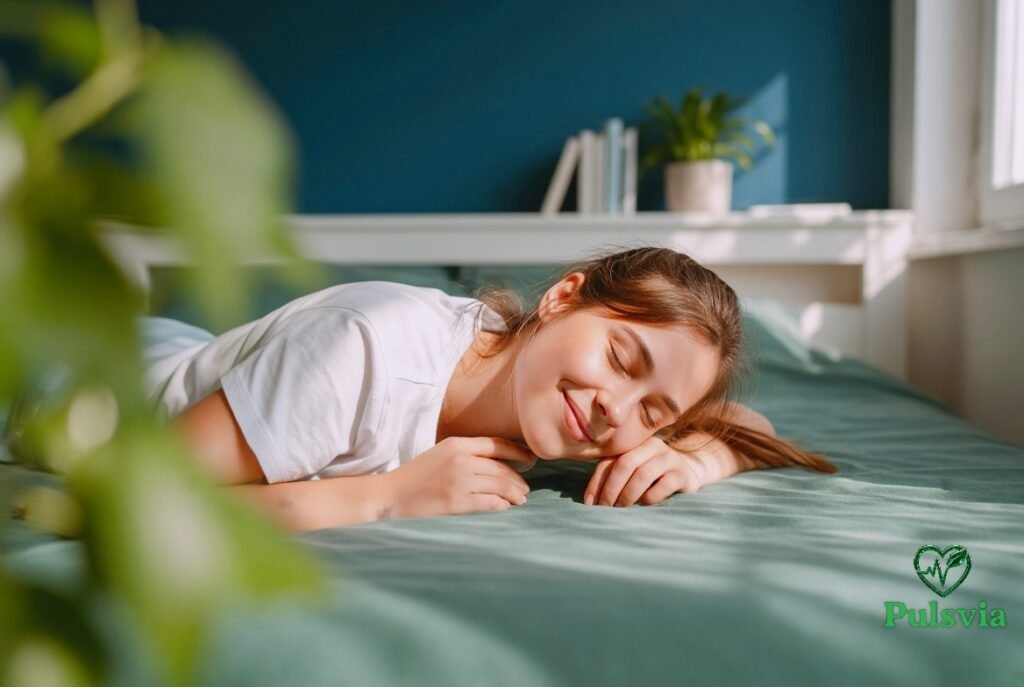
Outdoor daylight
A short walk, sitting outside with coffee, or eating breakfast on a porch can all work. The goal is just getting outdoors during the earlier part of your day when it’s practical.
Indoor daylight
Sitting near a bright window is usually better than staying in a dim room, though indoor light intensity varies a lot depending on window size, orientation, and time of year.
Cloudy mornings
Here’s something worth knowing: outdoor light on a cloudy day is often still brighter than typical indoor lighting, even though it doesn’t feel that way. Weather, season, and your location all play a role in exactly how bright that light is.
Did You Know? Sleep experts have noted that timed light exposure plays a different role than general sleep-hygiene habits, and the right timing depends on the specific circadian concern involved [1].
How Long Should You Get Morning Light?
There’s no single number that fits every person or every schedule. Instead, try this practical starting point:
- Make outdoor light part of your first activity of the day.
- Repeat the habit consistently rather than doing it once and stopping.
- Adjust the timing based on season, latitude, weather, and your own schedule.
- Avoid looking directly at the sun, no matter how short the exposure.
Important: Light boxes are a separate category from ordinary daylight. If you’re considering one, follow the product’s instructions or check with a healthcare professional first.
Morning Light for Different Schedules
Standard daytime schedule
If you keep a fairly typical daytime schedule, outdoor light after waking — or during your first morning activity, like a commute or dog walk — is a reasonable starting point.
People who wake before sunrise
If you’re up before the sun, regular indoor lighting is fine until daylight becomes available. There’s no need to stare at bright lamps or rush out to buy a light box just because your alarm goes off early.
Night-shift workers
Morning light after finishing a night shift isn’t automatically the right move for everyone. It depends heavily on when you actually plan to sleep — daylight exposure right before your intended sleep window may work against you rather than for you [2].
Jet lag
Light timing for jet lag depends on which direction you traveled and your destination’s time zone. There’s no single universal schedule that applies to every trip, so this is worth researching for your specific itinerary or discussing with a clinician if travel disruption is frequent [3].
Morning Light and Evening Screens
Reduce unnecessary bright light late at night
A calmer, dimmer evening tends to pair well with a brighter morning. For more on building an evening wind-down, check out our guide on sleep hygiene routine.
Do not treat morning light as permission for late-night screen use
Here’s an important distinction: a great morning light routine doesn’t cancel out a highly stimulating, brightly lit bedtime routine. Both ends of the day play a role in your sleep timing.
Morning Light Routine Examples
| Reader Situation | Practical Starting Routine | Main Caution |
|---|---|---|
| Regular daytime schedule | Outdoor light during the first morning activity | Do not stare at the sun |
| Cloudy morning | Spend time outdoors or near a bright window | Light levels vary |
| Wakes before sunrise | Use normal indoor light, then get daylight later | Avoid self-prescribing light therapy |
| Night-shift worker | Match light timing to the planned sleep window | Morning daylight may delay daytime sleep |
| Recent long-distance travel | Use destination timing carefully | Direction and time-zone gap matter |
Tip: Pair morning daylight with something you already do — breakfast, a walk, or your commute — so it doesn’t feel like one more task.
When a Light Box Is Different
Natural daylight versus therapeutic light
A light box is a specific device used for particular purposes, and it isn’t identical to ordinary daylight streaming through a window or experienced outdoors [1].
Who should ask a clinician first?
Check with a healthcare professional before starting light therapy if you have:
- Bipolar disorder or a history of mania.
- Significant eye disease.
- Eye sensitivity or medications that increase light sensitivity.
- A diagnosed circadian-rhythm disorder.
- Severe or persistent sleep symptoms.
This list doesn’t mean these conditions automatically rule out light exposure — it just means a professional conversation is a smart first step.
Track Patterns Without Obsessing
Consider jotting down a few details each day:
- Wake time.
- Morning-light exposure (how long, indoors or outdoors).
- Bedtime.
- Sleep duration.
- Daytime alertness.
Look at these notes over several days rather than judging the routine based on a single night. Patterns tend to tell a more useful story than any one data point.
When to See a Doctor
Talk with your primary care physician if you experience:
- Persistent insomnia that doesn’t improve with routine changes.
- Severe daytime sleepiness.
- Symptoms that suggest sleep apnea, such as loud snoring or gasping during sleep.
- Major circadian disruption that interferes with work, school, or daily life.
- Sleep symptoms that continue despite trying light and schedule adjustments.
Summary
- Start small tomorrow — a short outdoor walk after waking is an easy first step.
- Adjust for your situation — night-shift work and travel need different timing than a standard schedule.
- Keep evenings in mind too — bright mornings don’t offset stimulating, bright nights.
- Ask a professional before light therapy if you have certain eye conditions, mood disorders, or persistent sleep issues.
- Give it time — track your patterns over several days rather than expecting instant results.
FAQs
Does morning sunlight help you sleep better?
Morning sunlight may help support your circadian rhythm, which plays a role in regulating your sleep-wake cycle. Evidence is stronger for some circadian applications than others, so results can vary from person to person [5].
What is the best time to get morning light?
There’s no single best time for everyone — it depends on your wake time, schedule, and location. Getting outdoor light during the earlier part of your day, soon after waking when practical, is a reasonable general approach.
How long should I sit in morning sunlight?
There’s no universal duration that fits every person. A practical starting point is making outdoor light part of your first morning activity and adjusting based on your schedule and how you feel over time.
Can morning light reset your body clock?
Light is one of several signals involved in circadian timing, and consistent morning light exposure may help reinforce your schedule. It’s not a guaranteed fix, and individual responses vary [1][5].
Is morning light better than a light-therapy lamp?
They’re different tools for different purposes. Natural daylight is a simple daily habit, while a light box is a specific device that some people use under professional guidance for particular circadian or mood-related concerns [1].
References
- AASM: Healthy Sleep Habits
- AASM: Circadian Adaptation to Shift Work
- AASM: Your Sleep Schedule
- NIH/PMC: Predicting Circadian Misalignment With Wearable Technology
- Sleep Foundation: Circadian Rhythm
- Mayo Clinic: Sleep Tips
- Cleveland Clinic: Sleep Hygiene
- CDC: Sleep and Sleep Disorders
- NIH/NHLBI: Sleep Deprivation and Deficiency
- NCCIH: Melatonin and Sleep
Educational Disclaimer
This article provides general information about light exposure and sleep timing. It does not diagnose or treat insomnia, circadian-rhythm disorders, depression, bipolar disorder, or any other medical condition. Speak with a qualified healthcare professional about persistent sleep problems or before using therapeutic light devices for a medical purpose.
For personal care, talk to your primary care physician. Call 911 for emergencies.