
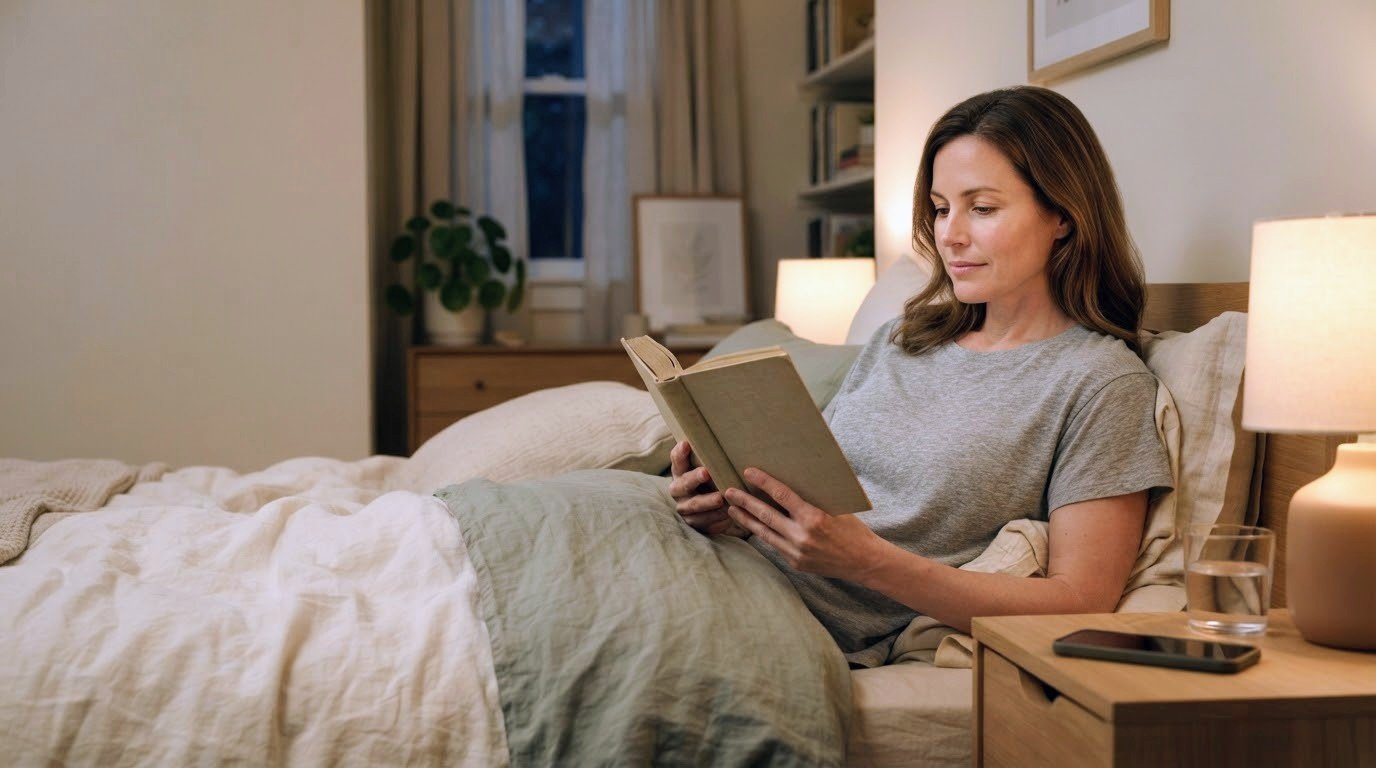
Ever spent a whole day feeling wiped out, then lay in bed wide awake once the lights finally went off? That mismatch is more common than you’d think, and it’s usually not about willpower.
Learning how to sleep better at night naturally starts with a handful of daily habits — not a miracle fix. Small, consistent changes to your light exposure, timing, and wind-down routine tend to matter more than any single trick.
This guide walks through a realistic, day-to-night approach: what to do in the morning, during the day, in the evening, and even if you wake up at 2 a.m. staring at the ceiling.
Quick Answer: There’s no instant natural cure for poor sleep, but a steady wake time, daytime light, a calm bedtime routine, and a comfortable bedroom may genuinely help.
Key Takeaways
- A consistent wake time anchors your body clock better than a strict bedtime alone.
- Daylight and movement during the day can reinforce healthy sleep-wake rhythms.
- Caffeine and alcohol timing matter more than most people realize.
- A short wind-down routine signals your brain that sleep is coming.
- Persistent sleep problems — not just occasional rough nights — deserve medical attention.
How to Sleep Better at Night Naturally
Here’s the short version: to sleep better at night naturally, you keep a regular sleep-wake schedule, get daylight and movement during the day, ease off caffeine and alcohol in the evening, wind down with a calm routine, and keep your bedroom dark, quiet, and comfortable. None of this replaces medical care for ongoing insomnia or sleep apnea — it’s a foundation, not a cure.
| Time of Day | Habit That May Help |
|---|---|
| Morning | Wake at the same time; get daylight within an hour of waking |
| Daytime | Move your body; watch caffeine timing |
| Evening | Eat a lighter meal; ease off alcohol and screens |
| Before bed | Dim lights; try a 10–15 minute wind-down |
| During the night | Stay calm; leave bed briefly if you’re wide awake |
Quick Wins to Try Tonight
You don’t need to overhaul your whole routine at once. Start small:
- Dim the lights an hour before bed — this may help signal that bedtime is close.
- Put your phone in another room, or at least out of arm’s reach.
- Try a 10-minute wind-down: quiet reading, gentle stretching, or a warm shower.
- Turn the clock away from view so you’re not watching minutes tick by.
- Keep the room comfortable — check the temperature, noise, and light levels.
NHLBI guidance points to a relaxing pre-bed period, a comfortable sleep environment, and limiting bright screens as core parts of healthy sleep habits [1].
Start With a Consistent Wake Time
Here’s something that surprises a lot of people: your wake time matters more than your bedtime when it comes to training your body clock.
A steady wake time — yes, even on Saturdays — helps keep your internal rhythm predictable. Your body starts to expect sleep at roughly the same time each night once the wake-up side is locked in.
Avoid the “catch-up sleep” trap. Sleeping in by three or four hours after one rough night can actually make the next night’s sleep harder to fall into. That doesn’t mean you should never rest — just that gradual adjustments tend to work better than big swings.
If you’re also dealing with trouble falling asleep once you’re in bed, a consistent sleep hygiene routine can help tie your wake time and bedtime together into one steady pattern.
Get Daylight and Movement During the Day
Morning or daytime light helps reinforce your body’s natural sleep-wake rhythm — something researchers call the circadian rhythm, or your internal 24-hour clock.
Even 10–15 minutes of outdoor light shortly after waking can make a noticeable difference for some people, especially during darker winter months.
Regular movement matters too. A daily walk or other moderate activity may support better sleep over time, though it’s not a guaranteed fix for insomnia on its own.
Timing matters for exercise as well. Some people find that intense workouts late in the evening make it harder to wind down, while others sleep just fine either way. NHLBI notes that regular physical activity and daylight exposure support healthy sleep, while cautioning that late exercise affects people differently [1].
Tip: Track your own pattern for a week — note when you exercise and how you slept that night. Your body’s response might surprise you.
Use Caffeine, Alcohol, and Nicotine Carefully
Caffeine sensitivity varies a lot from person to person. Instead of a strict cutoff time, try shifting your last cup earlier by a couple hours and see if it changes anything.
Alcohol can make you feel drowsy at first, but it tends to fragment sleep later in the night — meaning more wake-ups after the initial buzz wears off.
Nicotine acts as a stimulant for many people and can interfere with both falling asleep and staying asleep.
AASM and NHLBI resources both point to caffeine, nicotine, and alcohol close to bedtime as common sleep disruptors [1][4].
Make Evening Meals and Drinks Sleep-Friendly
A very large or heavy meal right before bed can leave you uncomfortable, or worse, dealing with reflux that keeps you tossing and turning.
There’s no need to swing the other way and restrict fluids aggressively, either — just be mindful if frequent nighttime bathroom trips are already a problem for you.
Skip the idea that any single food, tea, or smoothie guarantees better sleep. Evidence for most “sleep foods” is limited, and what works for one person may do nothing for another.
Create a Calming Wind-Down Routine
Picture this: someone spends their evening finishing emails, scrolling the news, then climbing into bed expecting to fall asleep instantly. It rarely works that way — your brain needs a runway, not a cliff edge.
A wind-down routine gives your mind a clear signal that the day is winding down. Pick one or two activities you can repeat most nights:
- Read a paper book (screens work against you here)
- Listen to quiet music
- Take a warm bath or shower
- Try gentle stretching
- Write down tomorrow’s first task to clear your head
- Practice slow, steady breathing
Keep it realistic. A five- to 15-minute routine is far more sustainable long-term than an elaborate ritual you’ll abandon after a week.
The National Center for Complementary and Integrative Health (NCCIH) describes breathing exercises, progressive muscle relaxation, and guided imagery as common relaxation techniques people use to unwind before sleep [7].
If falling asleep itself is the sticking point even with a good routine, how to fall asleep fast covers a few more targeted approaches worth trying.
Build a Sleep-Friendly Bedroom
Your bedroom setup plays a bigger role than most people give it credit for.
- Keep light low — blackout curtains or a sleep mask can help if streetlights or early sunrise are an issue.
- Reduce noise — earplugs or a fan running for steady background sound work for many people.
- Aim for comfortable temperature — this varies by person, so there’s no single “correct” number.
- Keep work out of bed — try to reserve the bed mainly for sleep, not scrolling or answering emails.
AASM guidance encourages a dark, quiet, comfortable room and cutting back on electronic devices before bed [4]. For more detail on setting this up, see sleep-friendly bedroom environment.
What to Do if You Wake Up at Night
Waking at 2 or 3 a.m. and staring at the ceiling is frustrating — but how you respond in that moment matters.
- Don’t check the clock repeatedly. Watching minutes pass tends to increase anxiety about the lost sleep.
- Keep lights dim if you need to get up.
- Avoid your phone. The light and content both work against you here.
- Try a short relaxation routine — slow breathing or a body scan.
- Leave bed if frustration builds. If you’ve been awake roughly 15–20 minutes and sleep feels far away, get up for a quiet activity in dim light, then return once you feel sleepy.
NHLBI and Mayo Clinic resources both suggest getting out of bed for a calm activity if you’re still awake after about 20 minutes [1][6]. If this happens often, how to fall back asleep after waking up walks through more detail, and if it’s tied to a specific wake time, why you may wake up at 3 a.m. explores common patterns behind that.
Natural Sleep Methods to Be Careful With
Not every “natural” sleep trend holds up, and a few deserve a closer look before you try them.
Warning: Do not combine alcohol, sleep medication, antihistamines, or supplements in an attempt to force sleep — this combination can be genuinely risky.
- Supplements like melatonin, magnesium, or herbal blends aren’t a universal fix. “Natural” doesn’t mean risk-free, and some supplements interact with medications — talk to a clinician before starting one, especially if you take other prescriptions.
- Alcohol as a sleep aid isn’t reliable; it tends to backfire on sleep quality later in the night.
- Mouth taping isn’t something to try for snoring or suspected sleep apnea without medical guidance.
- Extreme breathing methods, including breath-holding or hyperventilation techniques promoted online, lack solid evidence and aren’t worth the risk.
- Sleep trackers can estimate patterns, but they can’t diagnose insomnia or sleep apnea — a sleep score is a data point, not a medical result.
When Natural Habits May Not Be Enough
Natural habits genuinely help a lot of people, but they’re not a substitute for care when something bigger is going on. Talk to your primary care physician if you notice:
- Persistent insomnia — trouble falling or staying asleep for several weeks that affects your daily life
- Loud snoring or breathing symptoms — gasping, choking, or breathing pauses during sleep
- Severe daytime sleepiness — especially if you’re struggling to stay awake while driving
- Anxiety or low mood that’s making sleep harder, or a growing reliance on alcohol or medication just to fall asleep
If snoring and breathing pauses sound familiar, loud snoring and sleep apnea warning signs is worth a read. And if you’re constantly exhausted despite trying these habits, why you may feel tired all the time covers other possible causes worth ruling out. Racing thoughts at bedtime are common too — see calm anxiety at night for a few practical starting points.
Urgent Help
Call 911 or seek emergency care right away for:
- Severe breathing difficulty
- Chest pain
- Fainting or loss of consciousness
- Sudden confusion
- Sudden weakness, facial drooping, or trouble speaking
- Any situation that feels like a medical emergency
If you’re having suicidal thoughts or facing a mental health crisis, call or text 988 to reach the 988 Suicide & Crisis Lifeline — help is available 24/7.
Summary
- Consistency beats intensity — small, repeatable habits tend to outperform dramatic overnight changes.
- Your wake time anchors everything else, so start there if you only change one thing.
- Natural methods have limits — supplements and alcohol are not reliable long-term solutions.
- Track your patterns for a week or two if you’re not sure what’s disrupting your sleep.
- Loud snoring, ongoing insomnia, or severe daytime sleepiness are reasons to talk to a doctor, not just try another home remedy.
FAQs
How can I sleep better naturally at night?
Focus on a consistent wake time, daytime light and movement, easing off caffeine and alcohol in the evening, and a short calming routine before bed. These habits work together rather than as isolated fixes.
What can I do tonight to sleep better?
Dim the lights an hour before bed, put your phone out of reach, and try a short wind-down activity like reading or gentle stretching. Small steps tonight can start building a better pattern.
Does exercise help you sleep better?
Regular daytime movement may support better sleep for many people, though it’s not a guaranteed cure for insomnia. Timing matters too — some people find late, intense workouts make winding down harder.
Does caffeine affect sleep even if I drink it in the afternoon?
It can, depending on your personal sensitivity. Caffeine can stay in your system for several hours, so shifting your last cup earlier is worth trying if sleep feels off.
Can anxiety make it hard to sleep?
Yes, racing thoughts and worry are common reasons people struggle to fall or stay asleep. If anxiety at night feels persistent, a calming routine may help, but ongoing anxiety is worth discussing with a healthcare professional.
When should I see a doctor about poor sleep?
See a doctor if sleep problems last several weeks, come with loud snoring or breathing pauses, or leave you severely sleepy during the day. These signs suggest something beyond habits alone may be going on.
References
- NHLBI: Healthy Sleep Habits
- NHLBI: Your Guide to Healthy Sleep
- NHLBI: Sleep Brochure
- AASM: How to Sleep Better
- Mayo Clinic Health System: Sleep Is the Foundation for Healthy Habits
- Mayo Clinic Health System: Five Ways to Get Better Sleep
- NCCIH: Relaxation Techniques
- NCCIH: Mind and Body Practices for Sleep Disorders
- University of Illinois Chicago: Sleep Hygiene
- MedlinePlus: Insomnia
Educational Disclaimer
This article provides general information about sleep habits and natural approaches to supporting sleep. It does not diagnose or treat insomnia, sleep apnea, anxiety disorders, depression, or any other medical condition. Speak with a qualified healthcare professional if sleep problems persist, affect daytime functioning, occur with loud snoring or breathing pauses, or lead to severe daytime sleepiness. Call 911 for emergencies, or call/text 988 for a mental health crisis.