
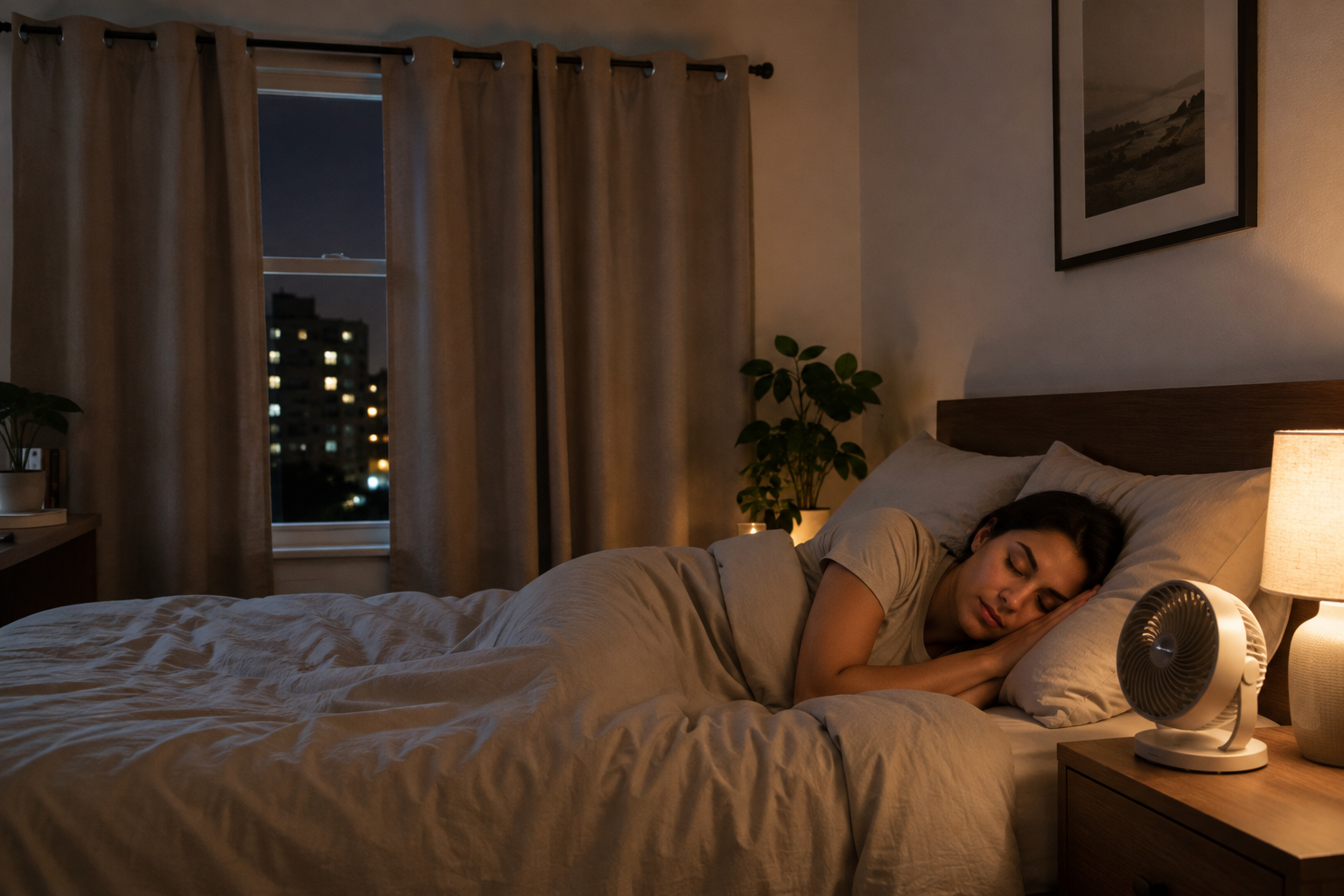
A car alarm at 1 a.m. A neighbor’s music through the wall. A partner who snores like a freight train. If any of this sounds familiar, you already know how one loud moment can wreck an otherwise decent night.
Learning how to block noise while sleeping doesn’t require expensive gadgets or a full remodel. Most solutions start with a few free or low-cost changes, based on exactly where the noise is coming from. This guide walks through practical fixes for traffic, neighbors, partners, roommates, and more — plus how to use earplugs and sound machines safely.
Quick Answer: Start by reducing noise at its source, add physical barriers like curtains or door seals, then use earplugs or steady background sound as needed — while always keeping emergency alarms audible.
Key Takeaways
- Reducing noise at the source works better long-term than simply drowning it out.
- Earplugs and sound machines can help, but fit and volume both matter for safety.
- Different noise sources — traffic, neighbors, partners — often need different solutions.
- Steady sound works better than unpredictable audio for masking background noise.
- Persistent sleep disruption with snoring or breathing pauses deserves medical attention, not just noise control.
How to Block Noise While Sleeping
The most reliable approach follows a simple order: reduce the noise first, add physical barriers second, use ear protection if it’s comfortable for you, and only then consider steady masking sound. If the problem persists, it may be time to address the source directly — whether that’s a conversation with a neighbor or a change to your sleeping arrangement.
The simple order to try:
- Reduce the noise at its source
- Add physical barriers
- Use ear protection if it suits you
- Mask unpredictable remaining sound
- Address the source directly if the problem continues
Reduce Noise at the Source
Before reaching for earplugs or a sound machine, see what you can fix at the source — it’s usually more reliable than trying to cover up the problem.
- Close windows during known noisy periods, like rush hour or weekend nightlife.
- Move your bed away from a shared wall or street-facing window if your room layout allows it.
- Close doors and seal obvious gaps that let hallway or street sound through.
- Turn off vibrating appliances — an old fridge or humming fan can add up more than you’d think.
- Ask household members about quiet hours, especially if you’re on different schedules.
Add physical barriers. Heavy curtains can reduce some outside light and sound, though they’re not a substitute for real soundproofing. Rugs and soft furnishings can cut down on echo inside the room. A simple draft stopper under the door may reduce some hallway noise too. Set realistic expectations here — these changes help, but they rarely eliminate heavy traffic, construction, or a genuinely loud neighbor entirely.
Ear Protection and Sound Machines
Earplugs may help reduce steady or moderate background noise for people who find them comfortable to wear. Fit matters a lot — a poorly fitted pair can be both uncomfortable and ineffective. Stop using them if they cause pain, skin irritation, discharge, or a blocked-ear feeling that gets worse over time.
Important: Keep emergency sounds audible. You should still be able to hear a smoke alarm, emergency alert, or a child calling for you when it matters.
Fans and sound machines offer another option. A basic fan provides steady background sound along with some air movement, which many people find comfortable. White noise can mask unpredictable sounds but feels harsh to some listeners. Pink and brown noise tend to sound softer or deeper — if you’re curious about the differences, pink noise for sleep covers that comparison in more detail. Sound preference is genuinely personal, and current research doesn’t establish one option as universally best.
Use a safe volume regardless of what you choose. Keep the device away from your pillow, set the volume at a comfortable level, and use a timer if you don’t need sound running all night.
A note on headphones and earbuds. Some people use audio to mask noise or create a bedtime cue, but overnight use comes with real downsides — ear discomfort, pressure from side-sleeping, tangled cords, and the risk of missing an alarm or emergency sound. If you go this route, skip wired cables in bed and keep volume low.
Noise Solutions by Source
Traffic noise. Close windows during peak hours, use curtains and door seals, and if possible, move your bed away from the street-facing wall. Steady masking sound can help too, though it won’t fully block heavy traffic or nearby construction — a quieter room in the home, if one’s available, may be worth considering for persistent cases.
Noisy neighbors. Start with a calm, specific conversation during the day rather than confronting someone in the middle of the night. If the problem continues, check your building’s rules or landlord procedures for handling repeated disturbances. In the meantime, earplugs and steady background sound can protect your sleep while you work on a longer-term fix.
A partner who snores. Bring it up during a calm daytime moment, not at 2 a.m. when frustration is high. Temporary options like earplugs, sound masking, or even separate sleeping arrangements for a night can help both people get rest. That said, loud snoring paired with gasping, choking, or breathing pauses is worth a closer look — see loud snoring and sleep apnea warning signs if that sounds familiar. This isn’t just a noise issue at that point.
Roommates, pets, and household noise. Agreeing on quiet hours goes a long way. If you use headphones or a speaker, keep the volume low and the device positioned safely. Moving your sleeping area, if that’s an option, can also help — and planning around predictable noise (like a roommate’s early alarm) beats being caught off guard every time.
Soundproofing vs. Sound Masking
These two approaches solve different problems, and knowing the difference helps you pick the right tool.
| Method | What It Does | Best For | Limitation |
|---|---|---|---|
| Curtains and rugs | Reduce echo and some sound transmission | Light indoor noise | Limited against heavy traffic |
| Door seal | Reduces gaps around a door | Hallway or roommate noise | Doesn’t block all sound |
| Earplugs | Reduce incoming sound | Moderate, steady noise | Fit and comfort vary by person |
| Fan | Adds steady background sound | Traffic or household noise | Doesn’t remove the source |
| White or pink noise | Masks unpredictable sound | Light sleepers | Can itself become disruptive |
| Moving the bed | Increases distance from source | Street or shared-wall noise | Not always practical |
| Professional soundproofing | Reduces sound transmission | Persistent structural noise | Costs money and requires installation |
What If Noise Keeps Waking You?
If you’re still struggling after trying a few of these fixes, tracking a bit of detail can help you spot what’s actually going on.
Track the pattern. Note the time of the noise, its source, how long it lasts, the type of sound, whether it fully wakes you, and which interventions seemed to help.
Check for other sleep disruptors too. Heat, light, stress, caffeine, alcohol, pain, and snoring can all contribute alongside noise — it’s rarely just one thing. If waking up due to noise (or anything else) has become a regular pattern, how to fall back asleep after noise wakes you covers practical steps for getting back to sleep once you’re up. Ongoing disruption can also build nighttime stress over time — see nighttime stress after repeated sleep disruption if you’ve noticed yourself getting anxious about noise before you even go to bed.
Protect your daytime safety. If poor sleep is leading to severe daytime sleepiness or drowsy driving, that’s a sign to prioritize a real fix rather than just tolerating the noise.
When to See a Doctor
Talk to a healthcare professional if you experience:
- Persistent insomnia despite a quieter sleep environment
- Severe daytime sleepiness
- Loud snoring, gasping, choking, or breathing pauses
- Tinnitus, hearing changes, or ear pain
- Anxiety or low mood tied to ongoing sleep disruption
- Sleep problems that continue for several weeks
When to Seek Urgent Help (Call 911)
Call 911 or seek emergency care for:
- Severe breathing difficulty
- Chest pain
- Fainting or loss of consciousness
- Sudden confusion
- Sudden weakness, facial drooping, or trouble speaking
- Any situation that feels like a medical emergency
Summary
- Start with the source, not the workaround — reducing noise beats masking it long-term.
- Match the fix to the noise type — traffic, neighbors, and partners each need different approaches.
- Keep safety in mind with earplugs and sound machines — audible alarms and comfortable fit both matter.
- Track patterns if noise keeps disrupting sleep despite your best efforts.
- Snoring with breathing pauses is a medical concern, not just an annoyance to mask.
FAQs
What is the best way to block noise while sleeping?
It depends on the source, but a good starting order is: reduce the noise first, add physical barriers like curtains or a door seal, then consider comfortable earplugs or steady low-volume sound.
How can I sleep with noisy neighbors?
Try a calm conversation during the day first, and use your building’s procedures if the noise continues. In the meantime, earplugs and steady background sound can help protect your sleep.
Do earplugs block enough noise for sleeping?
For many people, yes — especially for moderate, steady noise. Fit and comfort vary quite a bit, so it may take trying a couple of styles to find one that works for you.
Is it safe to sleep with white noise all night?
Generally yes, at a low, comfortable volume with the device placed away from your head. Use a timer if you don’t need it running continuously, and make sure important sounds like alarms stay audible.
How can I sleep when my partner snores?
Bring it up during a calm moment, not in the middle of the night. Temporary fixes like earplugs or sound masking can help, but loud snoring with gasping or breathing pauses is worth discussing with a doctor.
When does bedroom noise become a medical sleep problem?
If noise-related sleep disruption continues for several weeks, causes severe daytime sleepiness, or comes with snoring and breathing pauses, it’s time to talk to a healthcare professional rather than just adjusting your environment further.
References
- Sleep Foundation: How Noise Affects Sleep
- Sleep Foundation: White Noise and Sleep
- NHLBI: Healthy Sleep Habits
- AASM: How to Sleep Better
- NIDCD: Noise-Induced Hearing Loss
- CDC: About Sleep
Educational Disclaimer
This article provides general information about reducing bedroom noise and supporting sleep. It does not diagnose or treat insomnia, sleep apnea, tinnitus, hearing loss, anxiety, or any other medical condition. Speak with a qualified healthcare professional if sleep problems persist, or if noise-related sleep disruption occurs with loud snoring, breathing pauses, severe daytime sleepiness, ear pain, or hearing changes. Call 911 for emergencies.